Wash jeans when they need it, not by a fixed schedule
There is no single number of wears that works for every pair of jeans. A pair worn for a few hours at a desk will usually need less frequent washing than one worn all day in warm weather. Start with what you can observe: wash jeans when they smell, feel noticeably sweaty, have visible dirt, or no longer feel comfortable against your skin. Wash them sooner after a spill or any situation that calls for a thorough clean.
For jeans that remain clean and fresh, airing them between wears can help you put off an unnecessary wash. Empty the pockets, hang the jeans where air can circulate, and let any dampness dry fully before returning them to the wardrobe. If you rotate between pairs, each one also gets a chance to rest. These habits are useful, but they are not substitutes for washing dirty jeans.
Know what kind of denim you are caring for
Check the care label before deciding how to wash or dry a pair. Cotton denim, stretch denim and jeans with special finishes may have different instructions. Jeans containing elastane or another stretch fiber often feel forgiving when worn, but high heat can be hard on their shape over time. Following the label and using a cool, gentle wash is a sensible starting point when you want to protect both the fabric and the fit.
New dark jeans may release dye, especially during early washes. Washing them separately or with similarly dark clothing reduces the chance of color transfer. Raw denim is sometimes worn for longer between washes to develop a particular worn-in appearance, but that is a style preference, not a hygiene rule. If raw denim is dirty or smells, wash it according to its care instructions; expect that water may affect its color and feel.
Use a gentle wash for everyday denim
Before washing, close the zipper and buttons, empty every pocket, and turn the jeans inside out. Turning them inside out can reduce rubbing on the outer surface during the cycle, which is particularly helpful for dark washes. Use a cool-water setting, a gentle cycle if available, and a modest amount of mild detergent. Leave enough room in the machine for the jeans to move rather than packing the drum tightly.
For a small mark, try spot cleaning before washing the whole garment. Blot rather than scrub, and test any cleaner on an inconspicuous area first, especially on dark or treated denim. If the mark remains, a full wash may be the better choice. Avoid adding extra detergent in the hope of a deeper clean: residue can leave denim feeling stiff and may take additional rinsing to remove.
Drying matters as much as washing
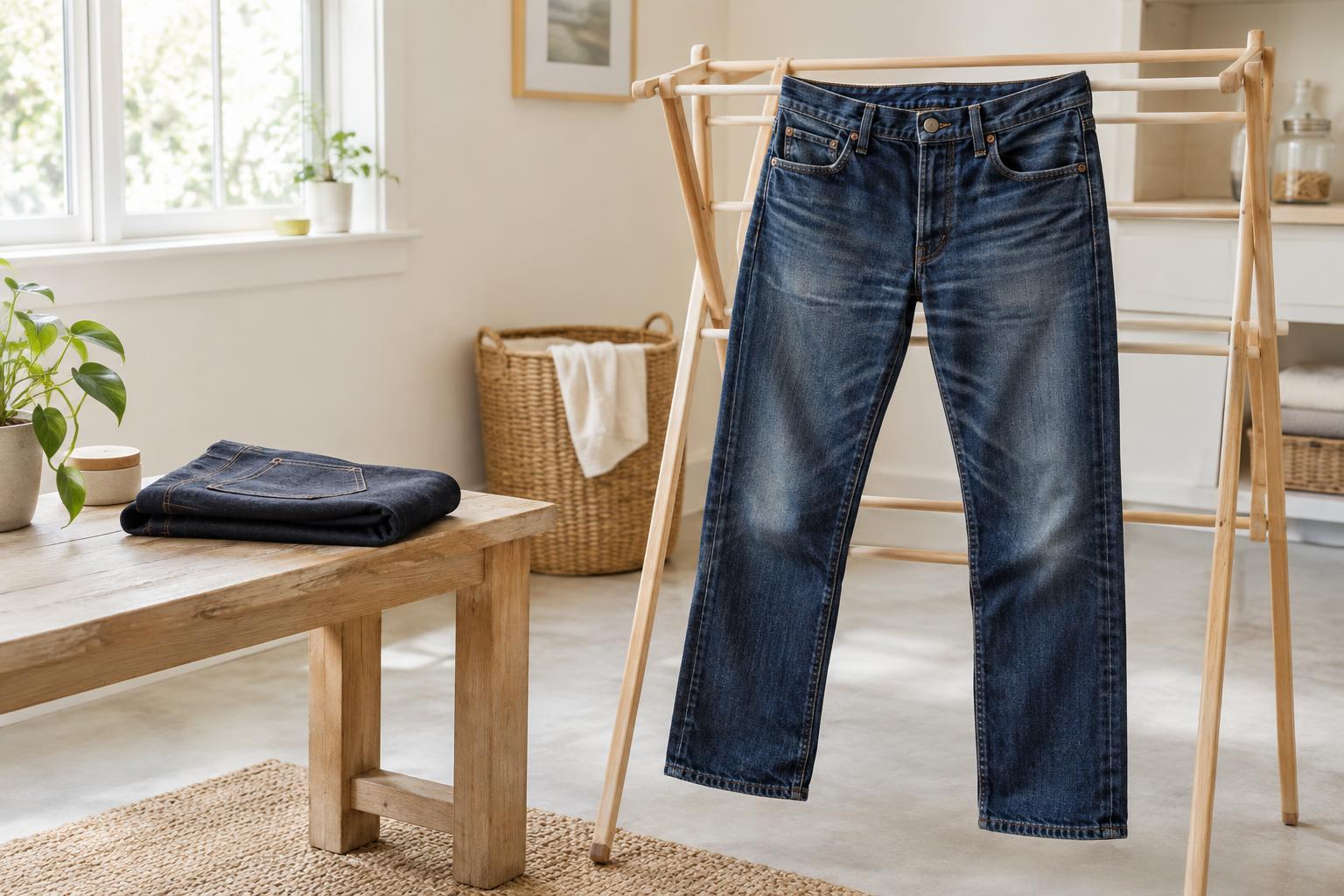
If preserving fit is the priority, air drying is often the gentlest choice. After washing, gently straighten the legs and seams, then hang the jeans or lay them flat with enough support to avoid deep creases. Keep them away from intense direct heat. Turn pockets outward if they are slow to dry, and wait until the jeans are completely dry before folding or wearing them.
A hot tumble dryer can cause cotton denim to shrink and may be unkind to stretch fibers. If the care label permits machine drying and you need to use it, choose a lower heat setting and check the jeans before they become overdried. Be cautious about using heat to make a loose pair feel snug again: any tightening may be temporary, and the result is difficult to control. Jeans that consistently lose their shape may need a different size, cut or fabric rather than a more aggressive laundry routine.
Help the fit last between washes
Denim commonly relaxes with wear, particularly around the knees, seat and waist. That does not always mean the jeans are permanently stretched out. A gentle wash and careful drying may help them feel firmer again, though the result depends on the fabric. When buying jeans, pay attention to how they fit after you have moved and sat down, not just how they look while standing still. A pair that is already uncomfortably tight is unlikely to become a reliable wardrobe staple.
Small habits also protect the shape you bought. Avoid carrying heavy objects in the pockets, which can pull at the fabric, and store jeans folded or hung without stretching the waistband. Treat spills promptly, air clean pairs between wears, and wash when they actually need cleaning. That balance keeps jeans ready to wear without subjecting them to more laundering—or more grime—than necessary.