Start with weight, but do not stop there
Fabric weight describes how much a cloth weighs for its size. You may see it listed in grams per square meter, but many clothing labels give no measurement at all. In a shop, you can still compare pieces by handling them: a lightweight shirt feels thin and flexible, while a heavier one usually feels denser and holds its shape more firmly.
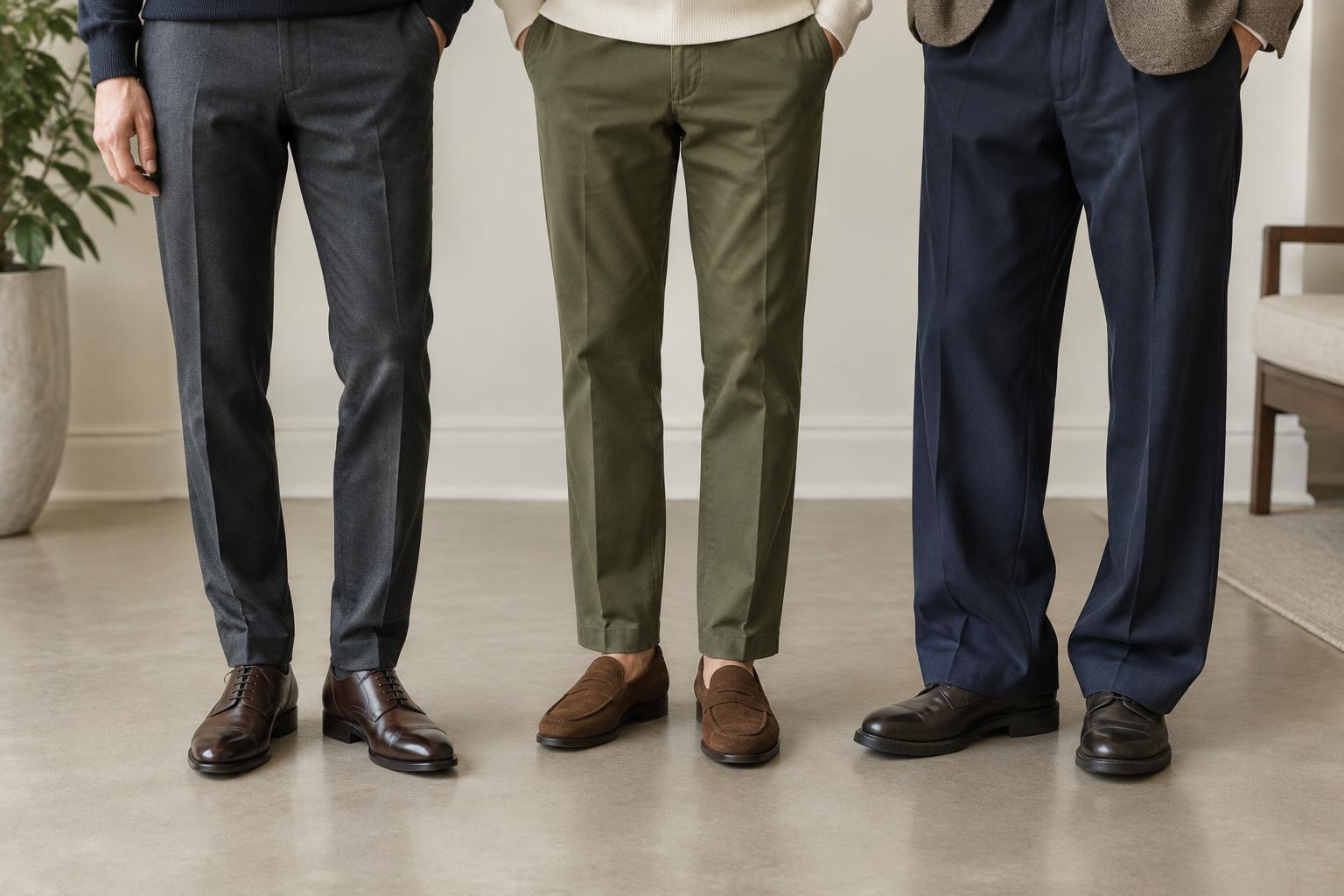
Weight affects how a garment hangs and how substantial it feels, but it does not tell you everything about warmth. A thick overshirt may block a breeze better than a thin shirt. Yet two fabrics of similar weight can feel different if one has an open weave and the other is tightly constructed. Treat weight as a starting clue, then consider texture, construction and the way you plan to wear the garment.
Understand what breathability feels like
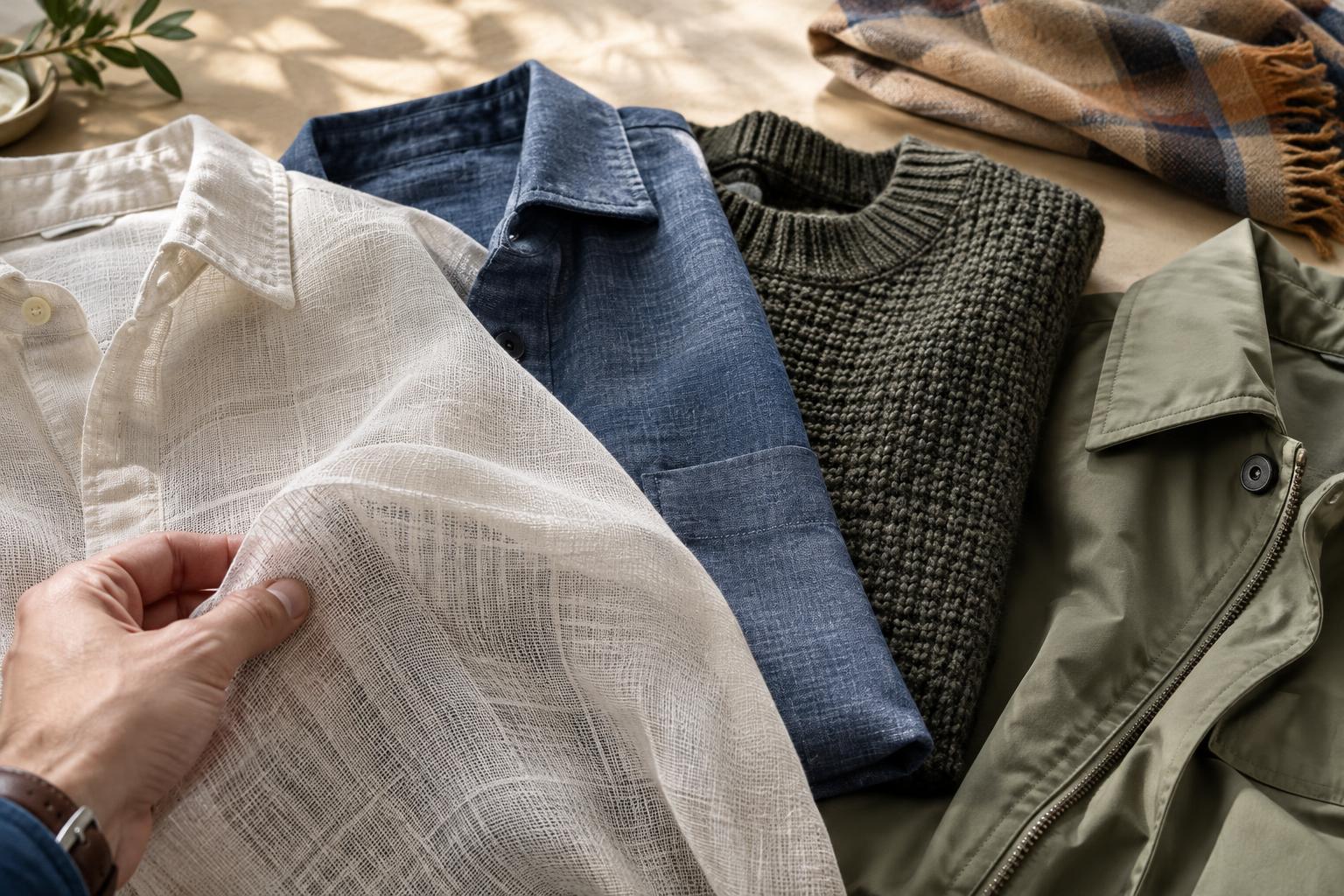
Breathability is a fabric’s ability to let air and moisture vapor move through it. When that movement is limited, warmth and dampness can build up next to your skin. Airflow depends partly on how closely the yarns are woven or knitted: an open linen weave often feels airier than a dense cotton twill. A loose-fitting cut can also make the same fabric more comfortable by allowing air to circulate.
Fiber matters, though it is not the only factor. Linen and many cotton fabrics can be pleasant in warm weather, while lightweight wool can work across a surprisingly broad range of temperatures. Some synthetic fabrics are designed to move moisture away from the skin, but a dense synthetic garment may still feel stuffy. Rather than assuming a fiber is always cool or warm, consider the whole garment: its weave, lining, fit and finish.
Choose for heat, cold and the weather between
In hot weather, prioritize garments that let heat escape and feel comfortable against your skin. A relaxed linen shirt, an open-weave cotton shirt or lightweight trousers can offer more airflow than tight, dense alternatives. If you need a sharper appearance, look for an unlined or lightly lined jacket in a breathable cloth. Remember that a thin fabric may be less opaque or less structured, so check it in good light before buying.
For colder days, look for useful insulation rather than weight alone. A wool sweater can trap air around the body, while a denser outer layer helps reduce the effect of wind. If rain is likely, breathability must be balanced against weather protection: a tightly woven coat or weather-resistant shell may keep water out more effectively but feel warmer indoors. Choose a layer you can remove instead of expecting one garment to handle every setting.
Spring and autumn often call for the most flexibility. A medium-weight cotton shirt, a fine knit and an overshirt or light jacket give you options as temperatures change. If your commute is cool but your workplace is warm, removable layers are usually more useful than a single heavy sweater.
Build outfits around the day ahead
Think about where you will spend your time before choosing a fabric. Walking outdoors, sitting in an office and riding public transport place different demands on the same outfit. For an active day, a breathable base layer can help you stay comfortable when you warm up; for a mostly seated day, a softer or heavier fabric may feel better. Fit matters too: leave enough room to add a layer without pulling at the shoulders or waist.
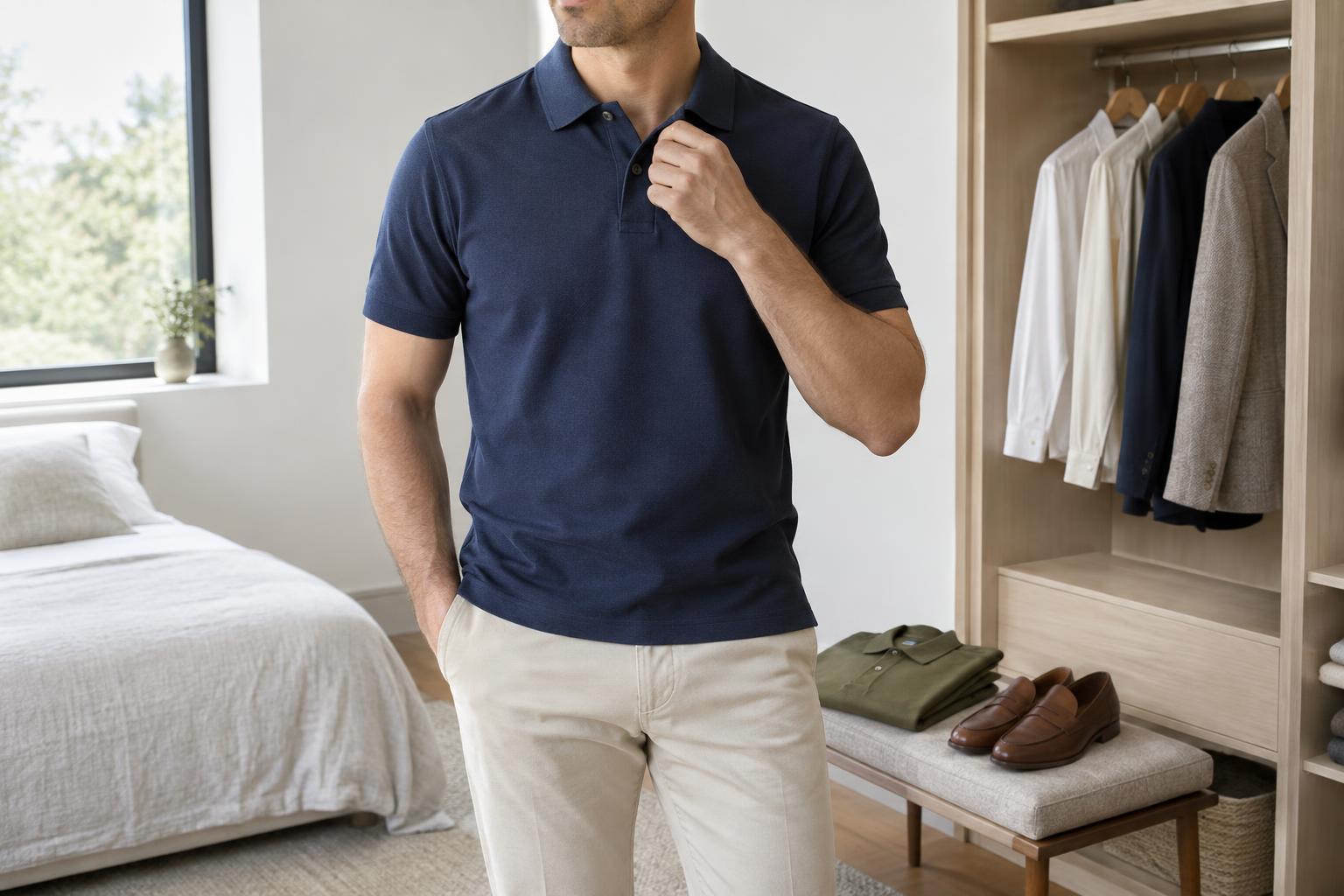
You do not need a separate wardrobe for every season. A medium-weight shirt can stand alone in mild weather, sit under a sweater in winter or work as an open layer over a T-shirt on a cool summer evening. Versatile pieces earn their place when their weight suits several uses and they are easy to combine with what you already own.
Check the garment, then care for it
Before buying, hold the fabric up to the light to judge its density, feel whether it is comfortable on your skin and try moving in it. Check for linings that may change how breathable it feels. If you run warm, wear the garment for a few minutes while trying it on rather than judging it only on the hanger. These simple checks can tell you more about day-to-day comfort than a seasonal label.
Care affects how well a fabric keeps its useful qualities. Follow the garment’s care label, avoid unnecessary high heat and let pieces dry fully before storing them. Give garments time to air between wears when appropriate. A well-kept lightweight shirt, knit or coat is easier to return to each season, making thoughtful fabric choices more valuable over time.