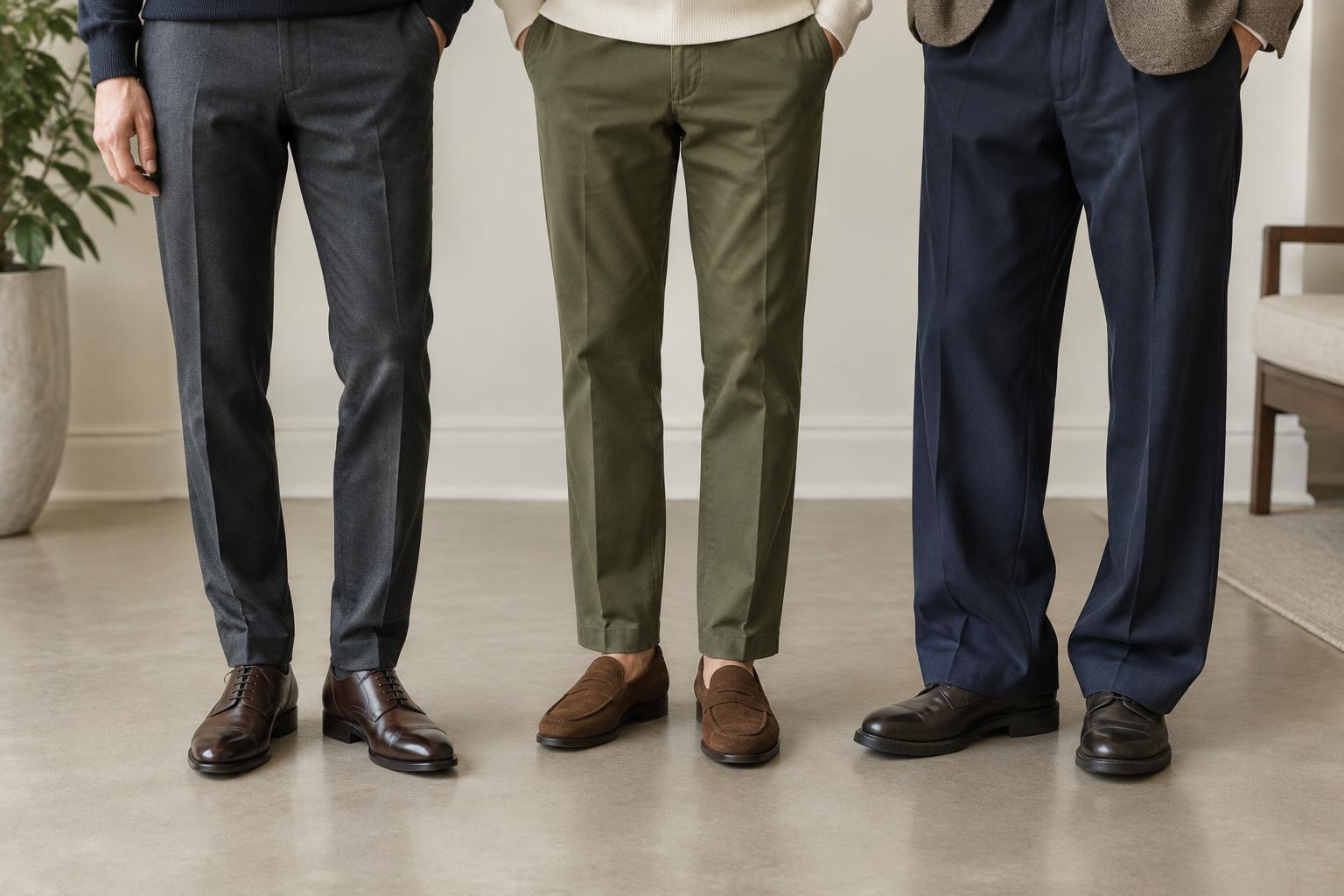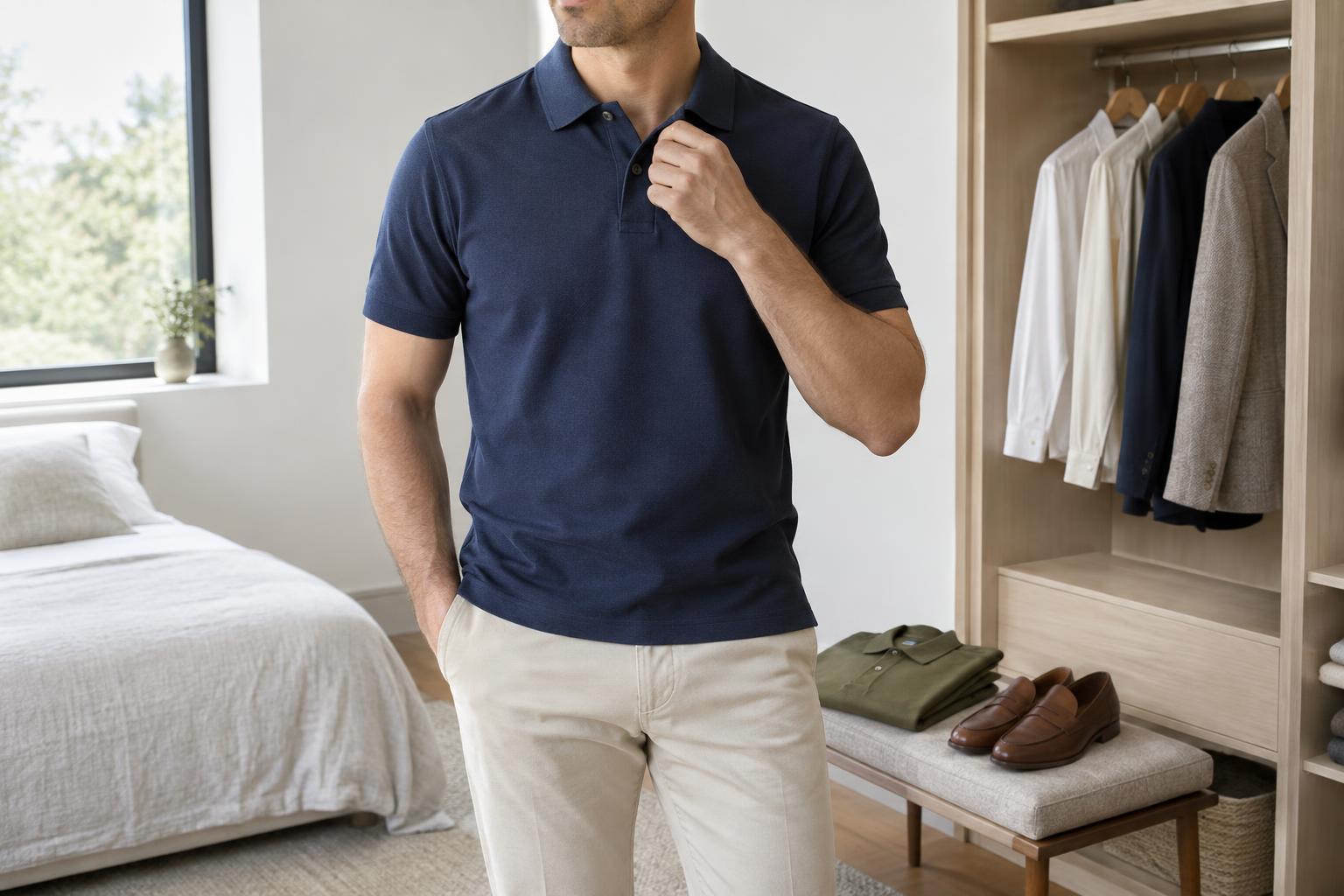
Start with the shape you want
Chinos can look relaxed or polished, but either way, they should follow your body without gripping it. A useful starting point is a waistband that stays put, enough room through the seat and thigh to sit comfortably, and a leg that narrows only as much as you want. The goal is a clean silhouette, not a perfectly smooth surface: some creasing is normal when you move.
Fit labels such as slim, straight, and relaxed are guides rather than reliable measurements. One brand’s straight fit may resemble another’s slim fit, and the fabric can change how a pair feels. Try chinos on with the underwear and shoes you would normally wear with them. Check the fit standing, walking, and sitting before deciding that a size works.
Waist: secure without relying on a belt
The waistband should sit comfortably at the height the chinos were designed to be worn. It should remain in place when you walk, without a belt doing all the work. If you need to pull the waistband tight to stop the trousers slipping, the waist may be too large. If it digs in, folds over, or feels restrictive when you sit, try another size or a different rise.
Pay attention to where the waistband lands on your body. A rise that is too short for you can make an otherwise suitable waist feel tight when seated. A higher rise may offer more room and coverage; a lower rise may feel better to someone who prefers trousers below the natural waist. Neither is automatically more flattering. Choose the position that lets the waistband stay level and comfortable.
A belt can finish an outfit or make a small adjustment, but it should not create heavy bunching around the waist. If the waist fits well and other areas do not, consider a different cut rather than buying a larger size solely to gain room in the legs.
Seat: room to sit, without excess fabric
Look at the chinos from the back and side as well as the front. The fabric should lie reasonably close over the seat without pulling tightly across it. Horizontal strain lines, pockets that flare open, or a waistband that drops noticeably at the back when you sit can suggest that the seat or rise needs more room. You should be able to sit down without feeling that the seams are under pressure.
Too much room has its own telltale signs. Fabric that hangs well below the seat or gathers heavily beneath it can make the trousers look larger than they are. If sizing down fixes the seat but makes the waist or thighs uncomfortable, try another fit. A different pattern may suit you better than an alteration to a pair with several problem areas.
Thigh: leave space for movement
The thigh is often where a pair feels fine in the mirror but fails in daily use. Walk a few steps, climb a stair if you can, and sit down. The fabric should move with you without clinging sharply, pulling at the pockets, or making the knees feel restricted. A tapered chino can still have comfortable thigh room; taper describes how the leg narrows, not how tightly it must fit at the top.
If you prefer a close silhouette, look for a leg that skims rather than grips the thigh. Chinos with some stretch may feel more forgiving, but stretch should not be the only thing making an undersized pair wearable. Conversely, a relaxed cut can have generous thigh room without looking baggy if the rest of the leg is proportionate. Judge the full shape rather than one measurement in isolation.
Hem: set the length for your shoes
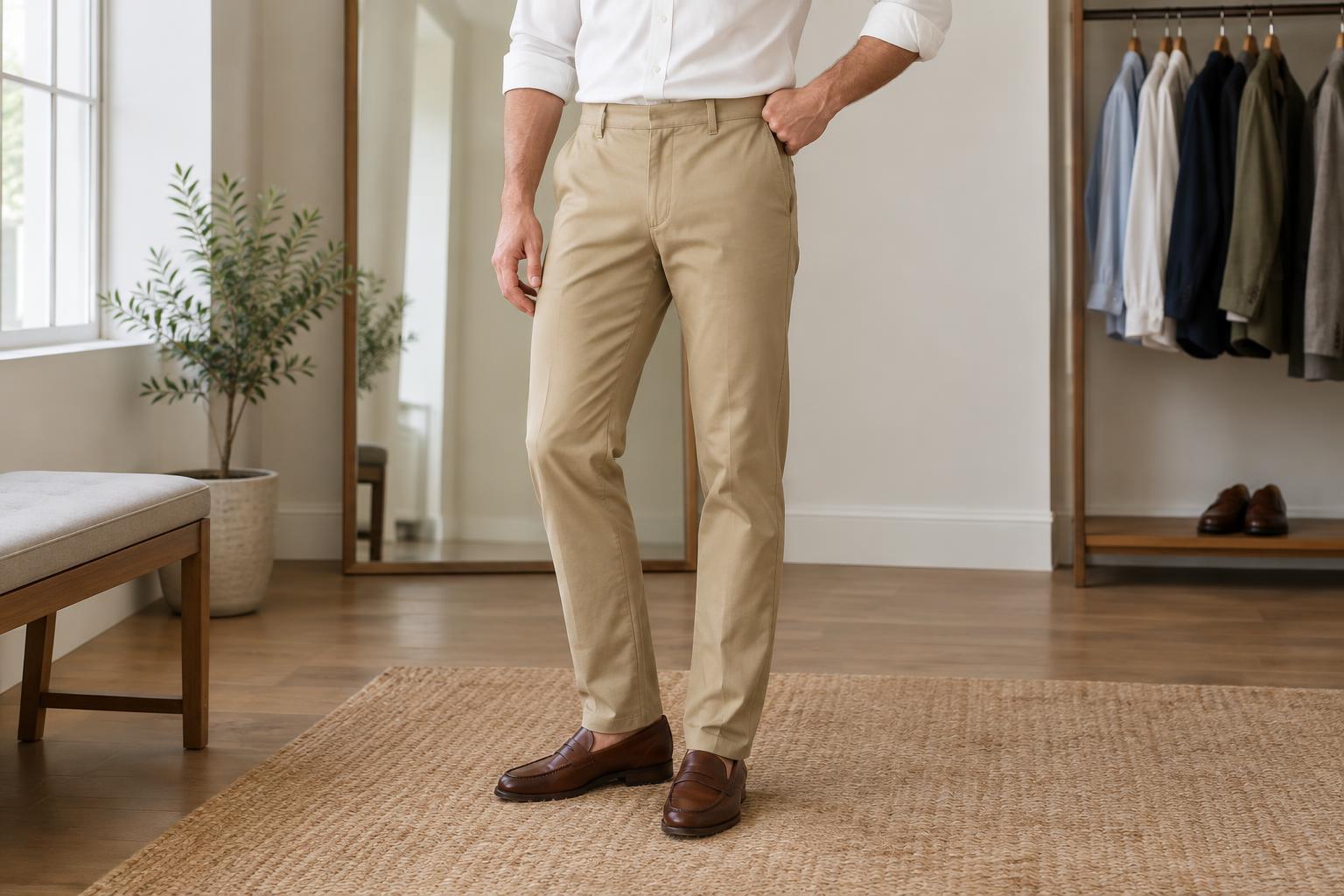
At the hem, decide whether you want a clean finish above the shoe, a light touch on its upper, or a small fold of fabric. All can work. A shorter hem often looks intentional with sneakers or loafers, while a slight break can feel natural with sturdier shoes. What matters is that excess fabric does not stack untidily around the ankle unless that is the look you want.
Check the leg opening as well as the length. A narrow opening may catch on a shoe and bunch up; a wider one may cover more of it than expected. Try the chinos with the footwear you plan to wear most often, then view them from the front and side. If the waist, seat, and thigh fit well, shortening the hem is usually a more straightforward adjustment than trying to reshape the upper half of the trousers.