Start with the shirt you plan to wear
A dress shirt can look tidy on a hanger and feel entirely different once you button it, sit down, or reach forward. When trying one on, fasten the collar and cuffs, tuck it into your trousers, and move as you would during a normal day. If you usually wear a tie or jacket, try those on too. You are looking for a shirt that follows your shape without pulling, collapsing into excess fabric, or restricting ordinary movement.
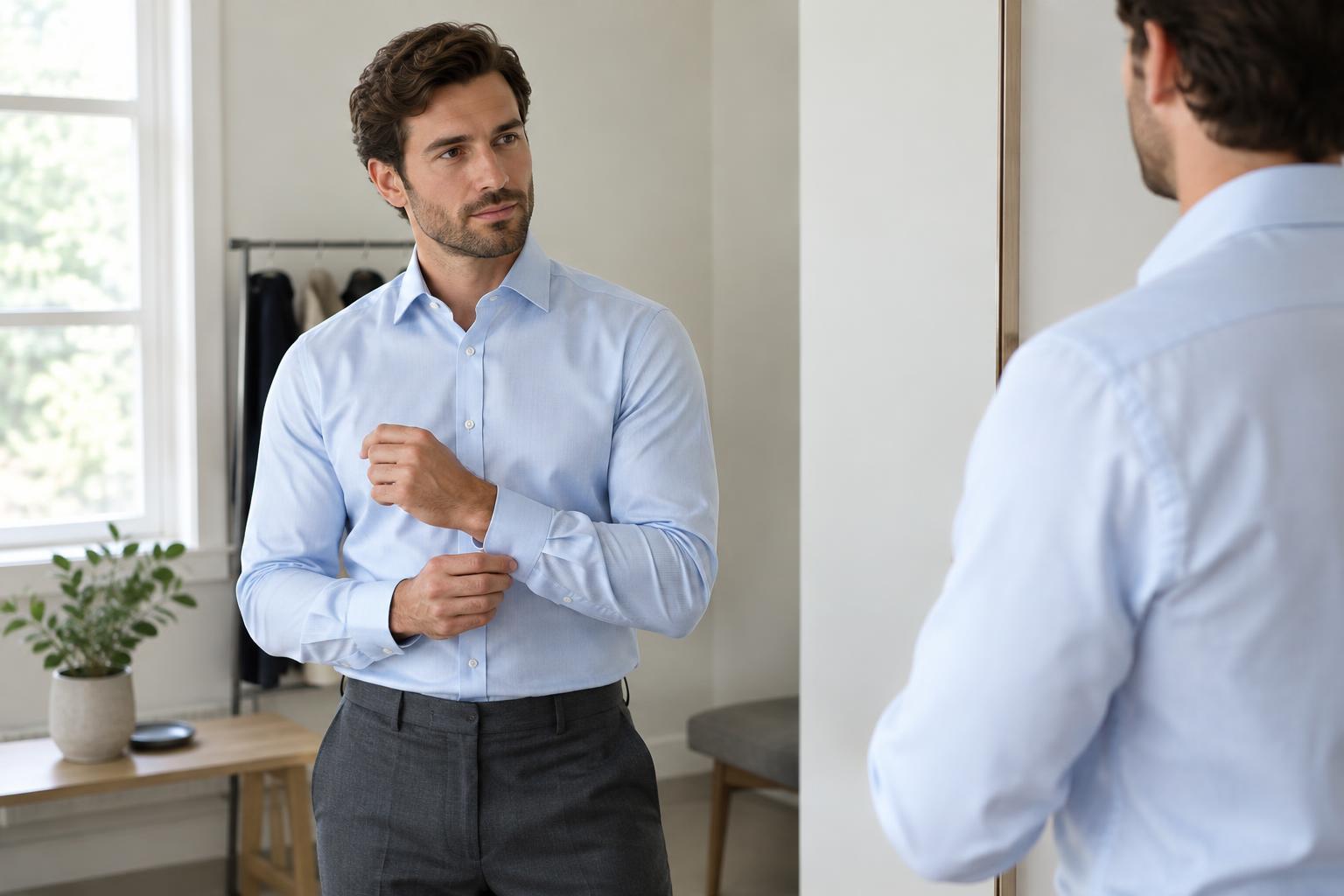
Check fit in a mirror from the front, side, and back. Fabric and cut affect what you see: a soft shirt may drape differently from a crisp one, while a slim cut leaves less room than a regular cut in the same labeled size. Treat the size tag as a starting point, not a verdict. The collar and shoulders deserve particular attention because changing them is generally less straightforward than adjusting the body or sleeve length.
Collar: close, but not constricting
Button the top button to assess the collar, even if you normally leave it open. It should sit against your neck without squeezing or creating a noticeable gap. You should be able to slip a finger comfortably between the collar and your neck. If the collar presses when you turn your head or swallow, try a larger neck size. If it stands away from your neck, especially with a tie, try a smaller size or a different shirt cut.
Look at the collar after you add a jacket, if you wear one. It should remain visible and sit neatly rather than disappearing beneath the jacket collar or riding up at the back. A collar that feels fine with the top button open may still be too small for a tie. Decide how you will actually wear the shirt before accepting that compromise.
Shoulders: keep the seam near the shoulder edge
The shoulder seam should land close to the point where your shoulder begins to slope into your upper arm. A seam that sits well down the arm can make the shirt look oversized. A seam pulled inward toward the neck can make the upper body look strained and may limit movement. Stand naturally while checking; holding your shoulders unusually straight can hide a fit problem.
Then raise your arms and reach forward. Some shifting is normal, but the shirt should not tug sharply across your upper back or pull the collar out of place. Shoulder width works together with the cut through the back and armholes, so a seam in the right spot does not guarantee comfort on its own. If the collar fits but the shoulders do not, try another cut or brand rather than assuming a change in neck size will solve both.
Chest and torso: room to breathe without billowing
With the shirt fully buttoned, the placket should lie reasonably flat down the center of your chest. Gaps between buttons, diagonal pulling lines, or a feeling of pressure when you sit or reach suggest that the chest is too tight. A little ease is useful, particularly if you wear an undershirt or spend much of the day seated. You should be able to move without relying on the fabric to stretch.
Extra fabric is not automatically a flaw: a dress shirt needs enough length and room to stay tucked as you move. But large folds at the sides or a pronounced balloon of fabric above your waistband can look untidy, especially without a jacket. If the collar and shoulders fit well but the torso is roomy, a slimmer cut or a modest alteration at the sides may help. Avoid chasing a skin-tight outline; the shirt should still hang cleanly when you sit.
Sleeves and cuffs: check them in motion
With your arms resting at your sides and the cuffs fastened, the sleeves should reach around the wrist bone. A small amount of shirt cuff can show beyond a jacket sleeve, but the more important test is whether the cuff stays near your wrist when you bend an arm or reach across a table. Sleeves that climb far up the forearm are likely too short; those that cover much of your hand are likely too long.
Look at sleeve width as well as length. The fabric should allow you to bend your elbow without strain, while avoiding heavy bunching along the arm. Cuffs should fasten comfortably and stay near the wrist rather than sliding over the hand. If the collar, shoulders, and chest are right, sleeve length is often a more practical alteration than trying to rescue a shirt that is too tight through the upper body. A good fit is one you can wear comfortably, not just one that looks sharp while you stand still.