Start with the office, not the label
Business casual is easier to navigate when you treat it as a range rather than a fixed list of approved clothes. A client-facing office may expect tailoring without a tie, while a creative workplace may welcome dark denim and clean sneakers. Before building an outfit, consider what colleagues wear on ordinary days, what changes for meetings and whether your role involves greeting visitors.
If you are new to a workplace, begin slightly more polished than you think necessary. A collared shirt, well-fitting trousers and leather shoes are easier to relax later than an outfit that feels too informal on arrival. Pay attention to condition as well as category: a crisp knit can look more professional than a wrinkled dress shirt. Across environments, good fit, clean footwear and clothes in sound repair do much of the work.
For traditional or client-facing offices: soft tailoring
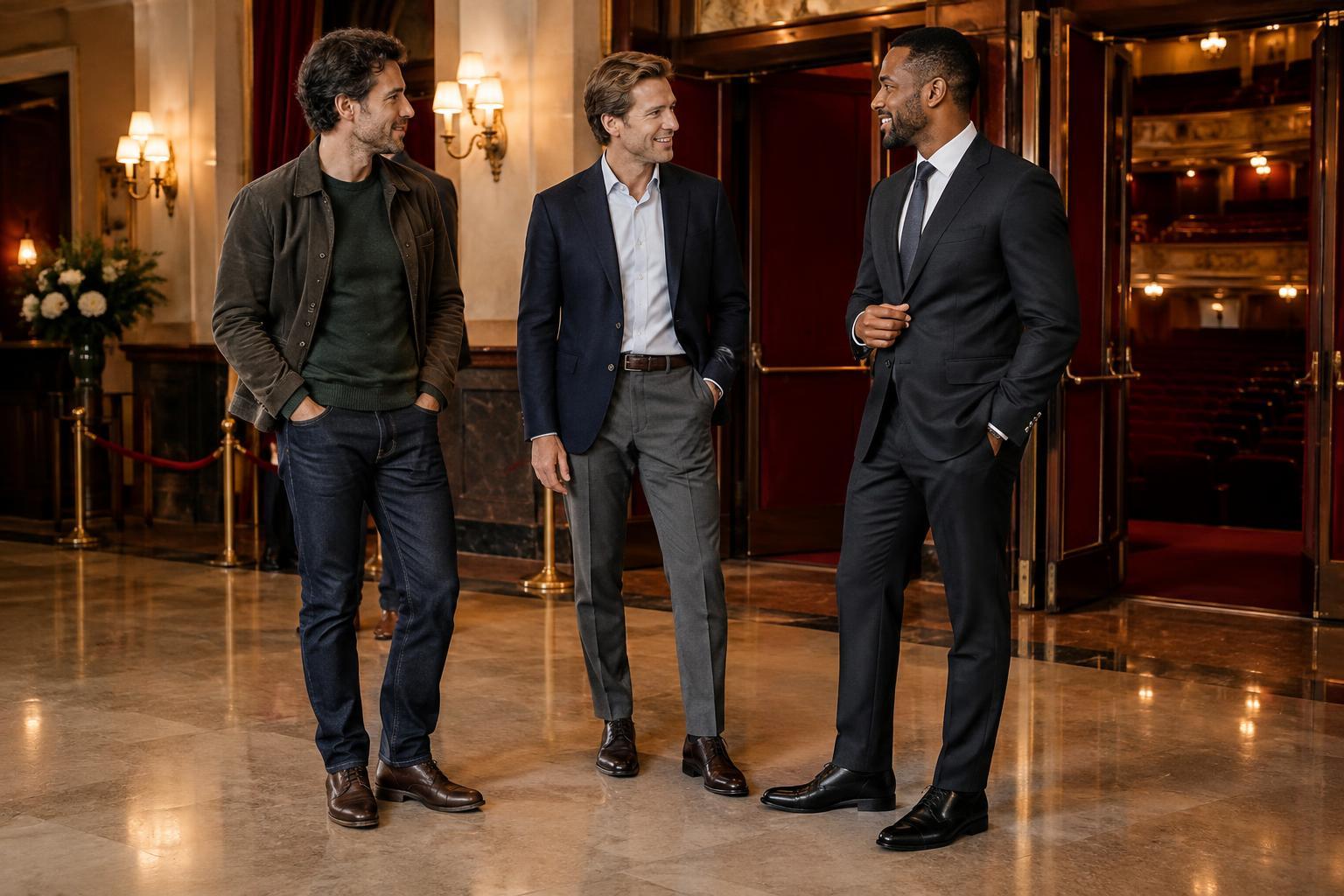
Try a navy or charcoal unstructured blazer, a pale blue or white button-down shirt, tailored trousers and leather derbies or loafers. The blazer gives the outfit a clear professional shape without requiring a matching suit. Choose trousers that sit comfortably at the waist and fall neatly over the shoes; excessive pooling at the hem can make otherwise smart clothes appear careless.
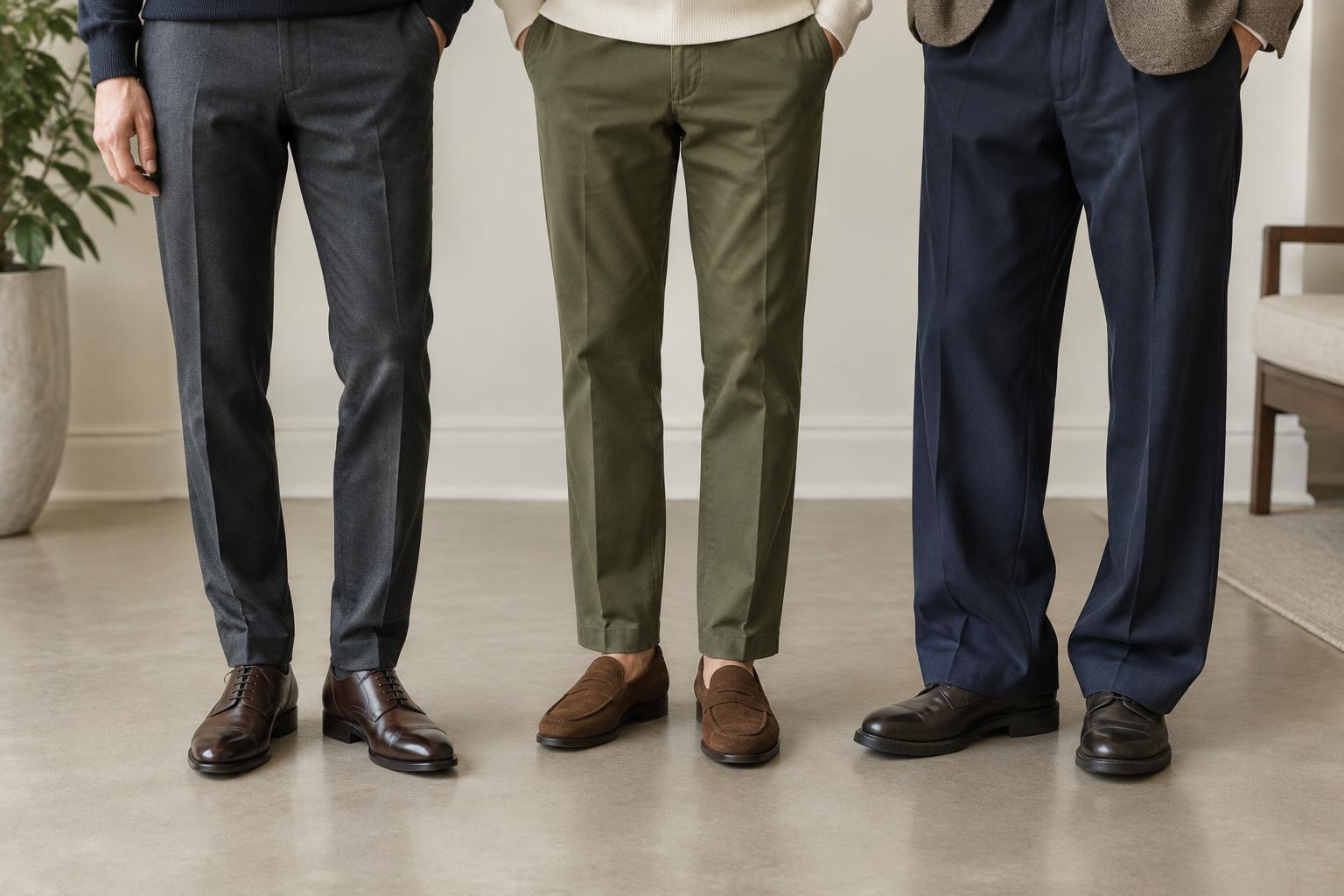
Keep the palette restrained so pieces are easy to repeat in different combinations. Grey trousers work with a navy blazer, while navy trousers pair well with a mid-grey jacket that is visibly distinct from the trousers. A fine-gauge sweater can replace the blazer on quieter days, provided the shirt collar sits neatly beneath it. If your office expects a tie for particular meetings, keep one available rather than assuming every business casual day calls for it.
For a flexible everyday office: a polished middle ground
Build around chinos in navy, olive, stone or charcoal, then add an Oxford cloth button-down and suede loafers, leather derbies or simple leather boots. This combination feels less formal than tailoring but still looks deliberate. A lightweight crewneck sweater over the shirt adds warmth without making the outfit bulky. You can swap the sweater for a casual blazer when your calendar calls for a sharper impression.
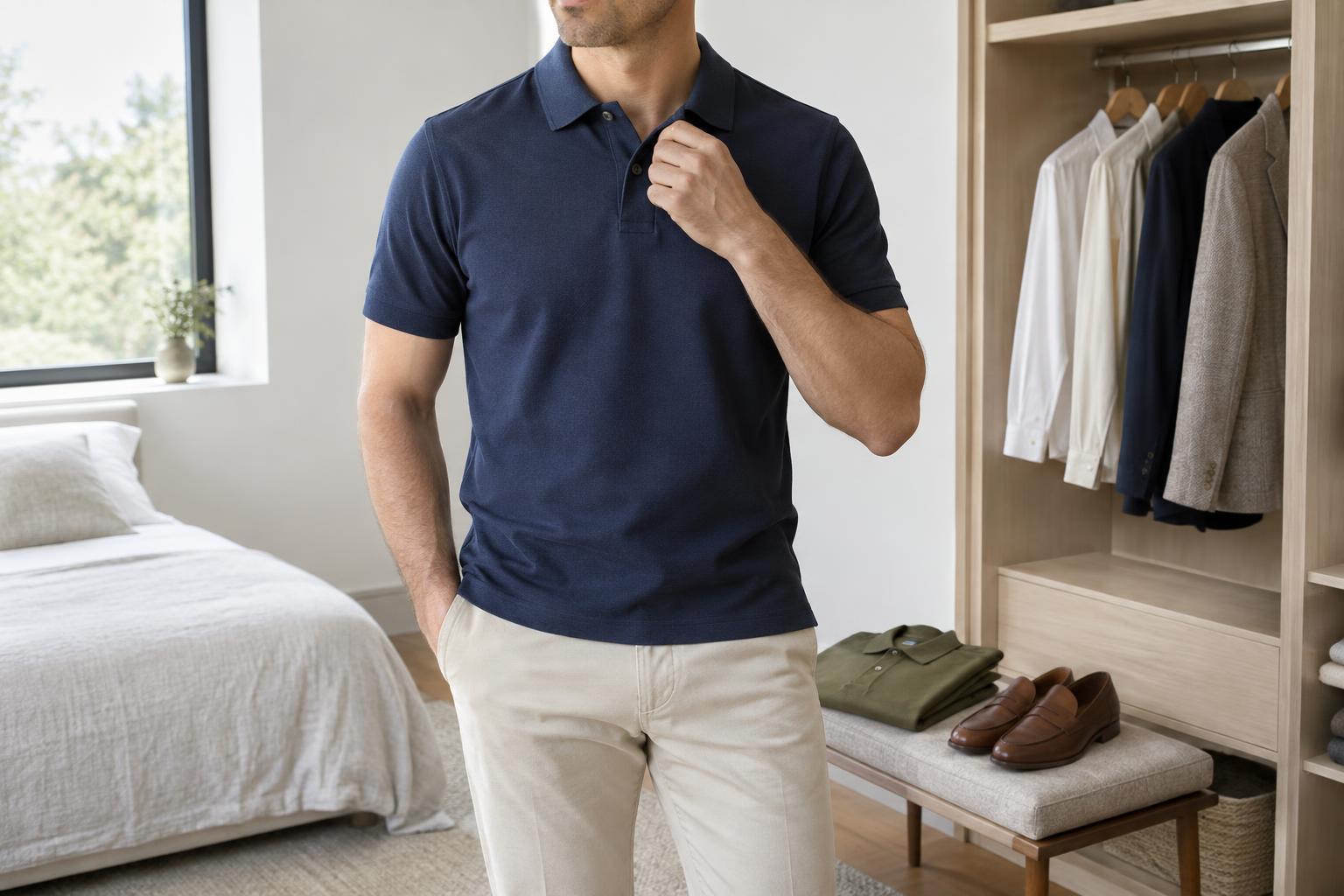
The key is to avoid making every piece casual at once. If you wear chinos with a textured overshirt, choose a tidy shirt and more refined shoes. If you prefer a polo, pair it with tailored trousers rather than heavily faded jeans. A belt that suits the formality of the shoes helps the outfit feel coherent, but it need not match their color exactly. These pieces can serve workdays and weekends, making them useful wardrobe foundations.
For a creative or relaxed office: keep the silhouette intentional
Where the dress code allows denim, start with dark, clean jeans in a straight or gently tapered fit. Add a plain knit polo, an Oxford shirt or a substantial crewneck sweater. Finish with minimal sneakers, loafers or casual boots, depending on how informal the office feels. Jeans without prominent distressing are generally easier to dress up, and sneakers look most work-ready when their shape is simple and their uppers are clean.
An overshirt or chore jacket can provide structure when a blazer would feel out of place. Aim for enough room to move, but avoid an outfit in which every layer is oversized. If you have a presentation or a first meeting with someone outside your team, switch the jeans to chinos or wool trousers and consider changing the sneakers to leather shoes. You can stay comfortable while signaling that you have dressed for the occasion.
Adjust the formula for the day ahead
Think of each outfit as three adjustable parts: a base, a layer and shoes. Keep the base consistent, then raise or lower the formality of the other two. For example, an Oxford shirt and chinos can support a blazer and derbies for a meeting, or a crewneck sweater and clean sneakers for a routine desk day. This approach reduces the need for separate wardrobes for every office scenario.
Seasonal changes should preserve the same balance. In warmer weather, choose breathable shirts and lighter-weight trousers rather than relying on shorts unless your workplace clearly permits them. In cooler months, add a fine knit, sturdy outerwear and weather-appropriate shoes. Check the full outfit before leaving: sit down, walk around and make sure collars, hems and layers stay comfortable. Business casual works best when you can focus on your day instead of adjusting your clothes.