Start with what you actually carry
Before choosing a style, put your usual daily items on a table: laptop, charger, keys, wallet, lunch, water bottle, notebook, and anything else you regularly take. A bag that looks ideal when empty may feel cramped once those items are inside. Check your laptop’s measurements against the bag’s sleeve, and allow enough room to take it out without forcing the zip.
Think about your route as well as your belongings. A short walk from car to office asks less of a bag than a train commute with stairs and time spent standing. If you often carry a full water bottle, lunch, and an extra layer, weight distribution matters. If you carry little more than a tablet and a notebook, a large bag may add bulk without being useful. Choose for a typical busy day rather than the occasional trip when you need to pack everything.
The briefcase: tidy and easy to dress up
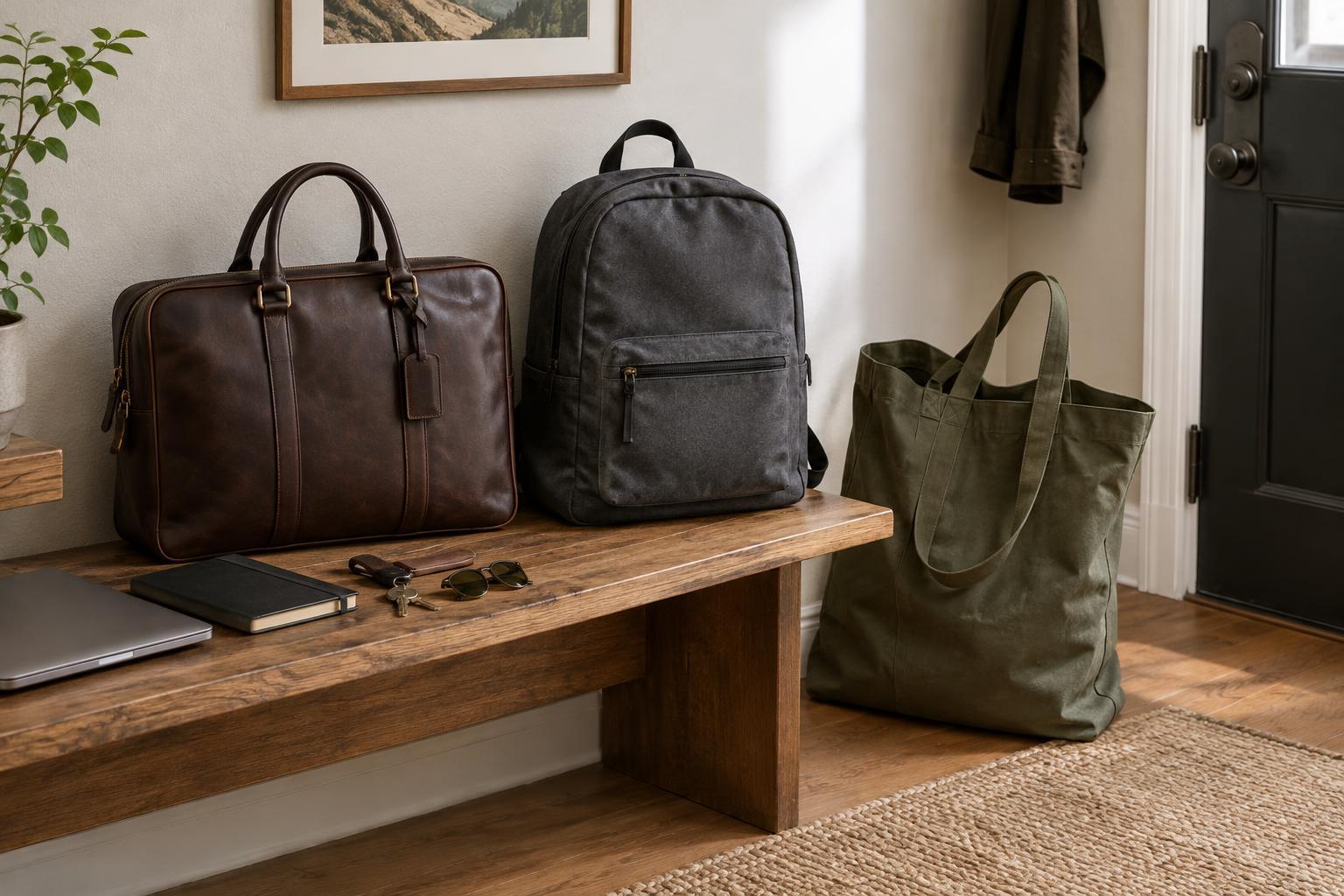
A briefcase gives papers and electronics a defined place and tends to sit naturally alongside tailoring, smart trousers, and a coat. Modern versions need not be rigid or formal: a slim fabric or soft leather case can work with business-casual clothes. The shape makes documents easier to keep flat, while a structured base helps the bag retain a neat outline when it is set down.
The trade-off is how you carry it. A briefcase held by its handles occupies one hand; a shoulder strap frees that hand but can become uncomfortable if the bag is heavy. Look for handles that feel secure, a strap wide enough for the likely load, and hardware that is easy to use. If you routinely pack gym clothes or groceries alongside your work items, a slim briefcase may be the wrong shape, however polished it looks.
The backpack: comfort for longer commutes
A backpack spreads weight across both shoulders and keeps your hands free. That makes it a practical choice for walking, cycling, or moving through crowded transport. It can also hold awkward extras, such as a light jacket or headphones, more easily than many briefcases. Choose a size that matches your frame and daily load: an overfilled small pack is frustrating, but a half-empty oversized one can look and feel cumbersome.
For a cleaner appearance, look for a simple silhouette, restrained colors, and straps that adjust so the bag sits close to your back. A padded laptop sleeve is useful, but confirm that the laptop does not rest directly on the bottom when you put the bag down. A backpack may feel less at home in a particularly formal setting, and its straps can crease a jacket or coat during a long commute. If you change into a tailored layer at your destination, it may be an especially easy choice.
The tote: flexible, with fewer barriers
A tote is easy to open, easy to pack, and often easy to pair with casual or smart-casual clothes. Its open interior makes room for changing daily needs, from a book to a spare shirt. A zip-top tote offers more security and weather protection than an open-top version, particularly on public transport or in rain. An interior pocket or small pouch also helps keep keys and earbuds from settling at the bottom.
The same flexibility can become a drawback when a tote is heavily loaded. Long handles can make it comfortable over one shoulder, but all the weight remains on that side. A soft tote may also let a laptop or documents shift unless it has a suitable sleeve. If you like the shape but carry expensive electronics, check the base, closure, and internal protection rather than relying on appearance alone.
Choose details you can live with
Whichever shape you prefer, examine the points that see daily wear: stitching where handles attach, zips, strap adjusters, and the bottom corners. A dark neutral bag is straightforward to combine with most outfits, but material and finish also affect the impression it makes. Smooth leather reads more polished and benefits from occasional conditioning appropriate to its finish; textured fabric can look more relaxed and may be simpler to wipe clean. Follow the maker’s care guidance, and let a wet bag dry naturally rather than placing it near strong heat.
Try the bag with your normal load and outerwear if possible. Can you reach your transit pass without emptying it? Does the strap stay on your shoulder? Does the bag fit where you need to store it? The best daily carry is not necessarily the most formal or feature-packed option. It is the one that protects your essentials, feels manageable on your usual journey, and looks comfortable beside the clothes you actually wear.