Start with the dress code and the fit
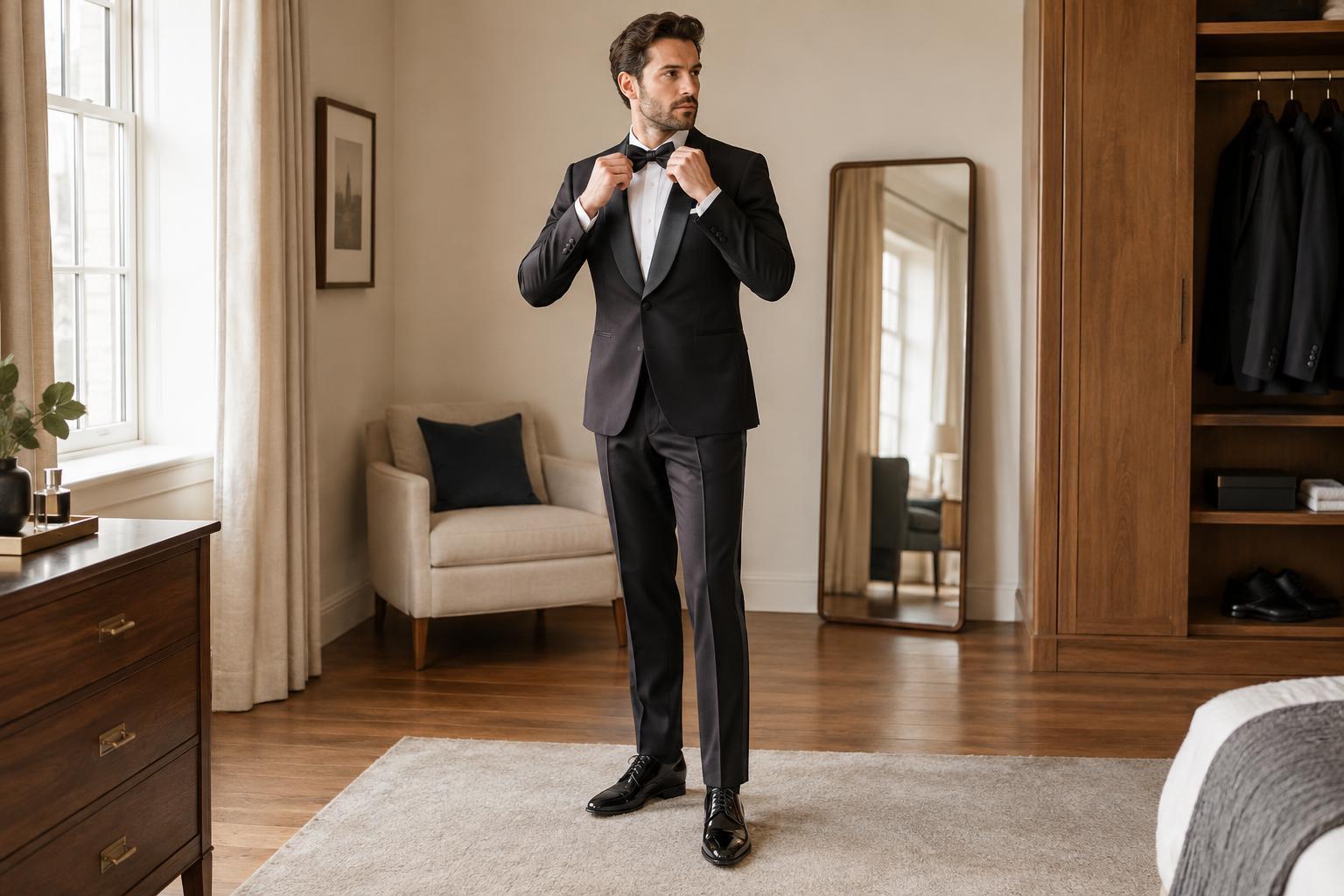
Black tie calls for a dinner jacket and matching formal trousers, worn with a dress shirt, bow tie and formal shoes. It is dressier than a dark business suit, even when that suit is beautifully tailored. If an invitation says “black tie optional,” a tuxedo remains an appropriate choice, while a dark suit may also be acceptable. When the wording is unclear, ask the host rather than guessing.
Fit does more for a tuxedo than an elaborate accessory. The jacket should sit cleanly across the shoulders and close without pulling; its sleeves should allow a little shirt cuff to show. Trousers should sit comfortably at the waist and fall neatly over the shoes. If you are renting, leave time to try on the complete outfit and arrange any permitted alterations. Check it while standing, sitting and walking—not just in a fitting-room mirror.
Choose a jacket and trousers that belong together
A classic tuxedo is black or midnight blue, with facing on the lapels and a matching stripe down the outside of each trouser leg. Peak lapels and shawl collars are established black-tie choices. A single-breasted jacket is versatile and easy to wear; a double-breasted jacket is another sound option, though it has a different look and is generally kept fastened while standing. Choose the shape that suits you rather than the one with the most dramatic details.
The trousers should match the jacket in cloth and color, not merely look close under dim lighting. Formal trousers are typically worn without a belt: side adjusters or braces keep the waist in place without a visible buckle interrupting the outfit. Aim for a clean line through the leg and a hem that does not bunch heavily on the shoe. If buying separates, confirm that they are intended as a set; two different blacks can be surprisingly noticeable side by side.
Keep the shirt and waist simple
A white dress shirt provides the clear contrast that makes black tie look sharp. A shirt with a pleated or piqué front and a turn-down collar is a dependable choice. French cuffs with understated cufflinks work well, and some formal shirts use studs instead of ordinary visible buttons. Make sure the collar fits comfortably with the bow tie fastened; a shirt that looks crisp but feels tight will be difficult to enjoy through an entire event.
With a single-breasted jacket, a black cummerbund or low-cut formal waistcoat can cover the shirt fabric that might otherwise show below the jacket button. Wear a cummerbund with its pleats facing up. You do not need both a cummerbund and a waistcoat. A double-breasted jacket generally needs neither, because its overlapping front covers the waist. Whichever route you take, avoid a belt and keep the layers smooth rather than bulky.
Finish with a bow tie and appropriate shoes
A black bow tie is the defining neckwear for black tie. A self-tie version has a slightly individual shape once tied, but a neat pre-tied bow is preferable to spending the evening adjusting a knot you cannot manage. Match its finish reasonably well to the jacket lapels: the aim is harmony, not a perfect color match under every light. A white pocket square, folded simply, adds brightness without competing with the shirt.
Black patent leather shoes are a traditional option; highly polished black leather dress shoes can also look right. Choose a streamlined pair and wear them with long black dress socks so bare skin does not show when you sit. Check that the shoes are comfortable before the event, especially if you expect to stand or dance. Leave casual soles, contrasting laces and attention-grabbing hardware for another occasion.
Make the final check before you leave
Put the entire outfit on with enough time to catch small problems. Fasten the shirt, straighten the bow tie, and confirm that the trouser stripe hangs straight. Check that your waist covering stays in place and that no shirt is visible between it and the jacket. Empty bulky pockets; a slim wallet or card holder is less likely to distort the jacket. If you wear a watch, choose a discreet one or leave it at home.
After the event, hang the jacket and trousers separately to air out, then brush away surface dust if the fabric allows. Treat any stains promptly according to the garment’s care instructions, and clean the suit when needed rather than automatically after every wear. Store the pieces together so they are ready for the next invitation. The best black-tie outfit is not the most complicated one: it is a set of well-fitting, compatible pieces that lets you forget about your clothes and enjoy the occasion.