Start with the care label, then consider the garment
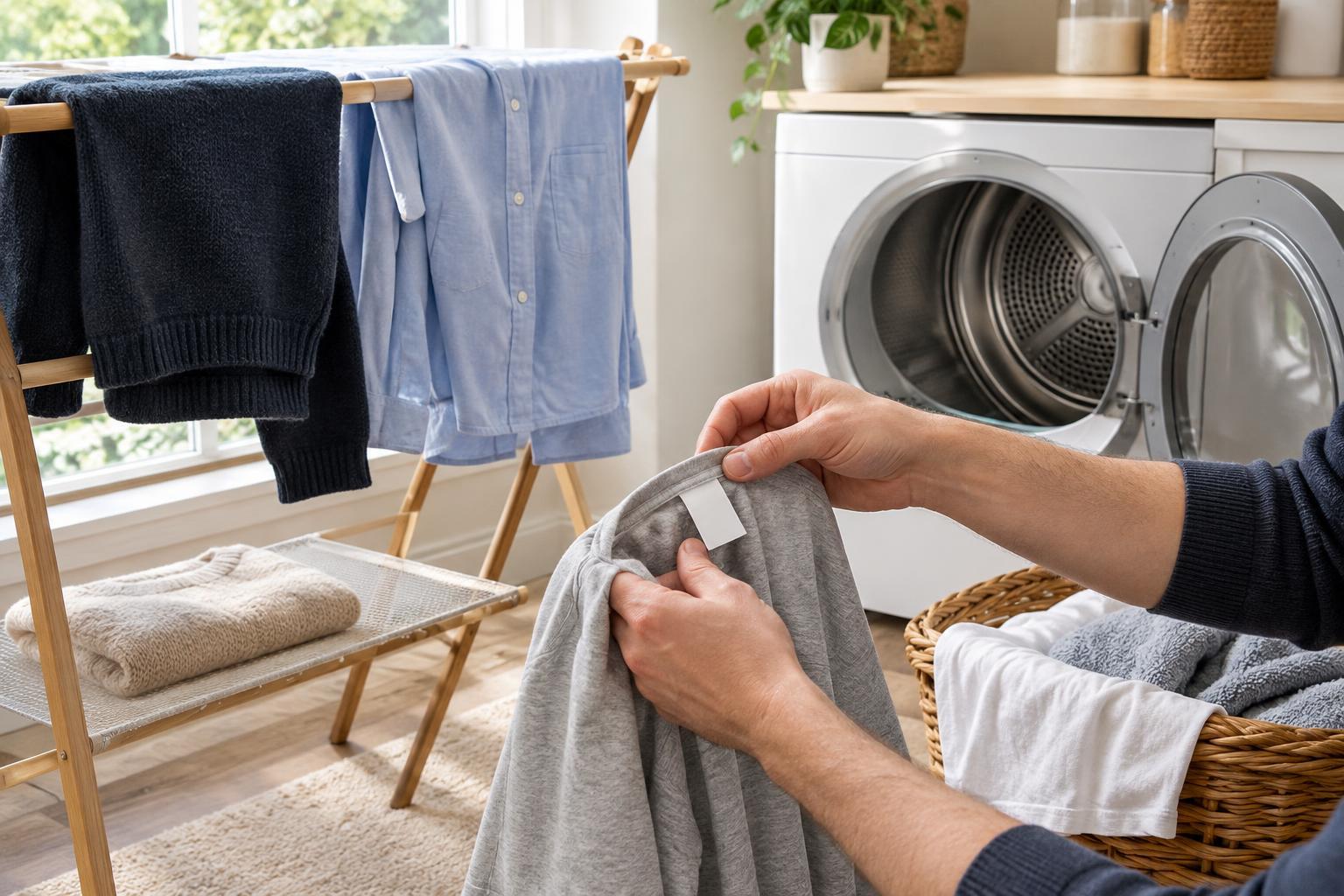
The dryer is convenient, but heat and tumbling can shrink some fabrics, wear down fibers and change the shape of a garment. Air drying avoids much of that heat and movement, though it takes longer and can leave clothes stiff or creased. Neither method is right for everything. The most useful rule is to check the care label first: it tells you what the maker recommends for that particular garment, including its fabric, construction and finishes.
If the label permits tumble drying, pay attention to the heat setting. A low-heat cycle is gentler than a hot one, but it is not a guarantee against shrinkage or damage. If the label says to dry flat, do not hang the item from its shoulders; the weight of wet fabric may stretch it. When a label is missing, begin with the gentler option, especially for a garment whose fit matters to you.
What usually belongs on a rack or a flat surface
Wool sweaters, cashmere and other delicate knits generally do best laid flat to dry. Gently press out excess water without wringing, reshape the body and sleeves, and place the knit on a clean towel or ventilated drying surface. Hanging a heavy wet sweater can pull it longer and leave bumps at the shoulders. Heat and agitation can also cause some wool garments to felt or shrink.
Air dry tailored pieces, delicate shirts and garments with linings, padding, embellishments or bonded details unless their labels say otherwise. Many blazers and structured jackets are not intended for a home wash at all, so check before getting them wet. For washable dress shirts, hanging on a suitable hanger while damp can reduce creases; straighten the collar, cuffs and placket before they dry.
Linen, dark denim and clothes whose exact fit you want to preserve are also good candidates for air drying. Linen may dry with wrinkles, but smoothing it while damp makes pressing easier. Turn dark garments inside out and keep them away from prolonged direct sun, which may fade some dyes. Leave space between items and choose a ventilated spot so they can dry thoroughly rather than remain damp in a crowded room.
When tumble drying makes sense
For sturdy basics whose labels allow it, tumble drying can save time. Cotton socks, undershirts and casual T-shirts are common candidates, although cotton can still shrink, particularly with higher heat. If you rely on a precise T-shirt fit, air dry it or use a low setting and take it out while slightly damp. Towels and similarly robust items often benefit from the movement of a dryer, which can leave them softer than rack drying.
Jeans and casual cotton trousers may be dryer-safe according to their labels, but repeated hot cycles can affect their size, color or finish. A compromise is to tumble them briefly on low, then hang them to finish. This can ease stiffness without exposing them to a full heated cycle. Empty pockets, close zippers and turn garments inside out before drying to help prevent snags and unnecessary surface wear.
Give performance fabrics and blends a closer look
Gym clothes, stretch denim and other garments containing elastane may not respond well to high heat over time. Follow their labels and favor air drying or a permitted low-heat setting. Keep performance garments away from radiators and other concentrated heat sources. Before drying them, wash them appropriately and check that any lingering odor has been addressed; drying is not a substitute for cleaning.
Blends cannot be judged by a single fiber on the label. A cotton-polyester shirt, for example, may be easier to care for than a delicate lined garment made from the same fibers. Construction matters too: elastic waistbands, prints, trims and adhesives may limit the drying method. When different parts of a garment suggest different approaches, use the gentlest method its care label allows.
Make either method work better
For air drying, shake out each item, smooth seams and hems, and avoid folding thick sections over a narrow rail where they may stay damp. Hang shirts from an appropriate hanger or line, but lay stretch-prone knits flat. Make sure clothes are fully dry before putting them away; trapped moisture can lead to a musty smell. If drying indoors, allow air to circulate around the rack.
For tumble drying, avoid overloading the drum so clothes can move freely. Select the lowest heat that suits the label, check garments before the cycle ends, and remove them promptly to reduce wrinkles. You can always finish a slightly damp item on a rack. That simple combination—brief, permitted tumbling followed by air drying—often offers a useful balance of convenience and care for an everyday wardrobe.