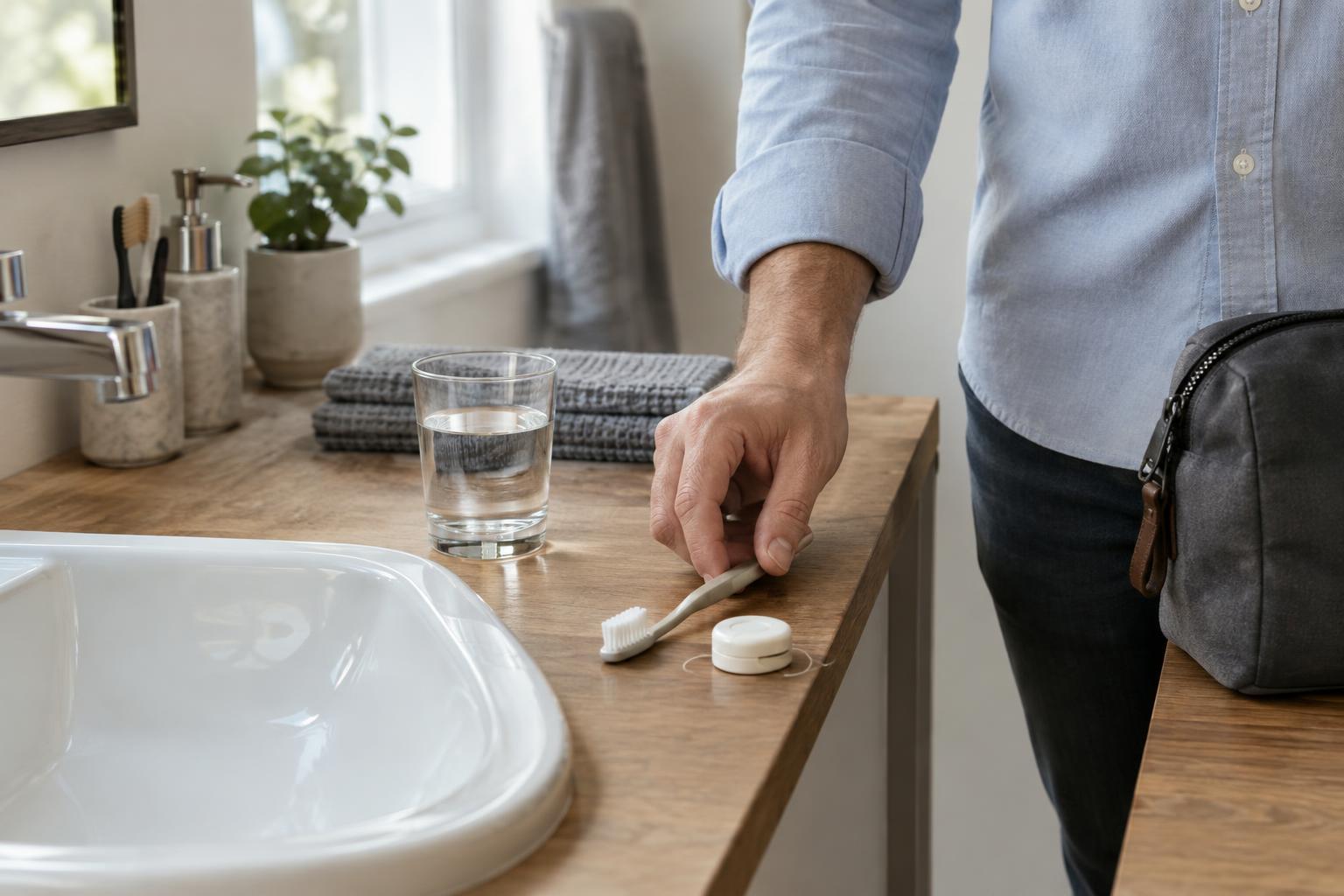
Make oral care part of getting dressed
Good grooming is not only about hair, skin, or the clothes you put on. A clean mouth and comfortable breath can help you feel prepared for a close conversation, a workday, or an evening out. The most useful routine is one you can repeat without much thought: brush in the morning and before bed, clean between your teeth regularly, and keep a few basics handy when you are away from home.
Think of oral care as maintenance rather than a last-minute fix. Mints may briefly cover an odor, but they do not remove food caught between teeth or the buildup that collects on them. A steady routine does more than a complicated collection of products used only before an occasion.
Brush thoroughly, not aggressively
For most adults, brushing twice a day with fluoride toothpaste is a straightforward starting point. Give yourself about two minutes so you can reach the front, back, and chewing surfaces of every tooth. Angle the bristles gently toward the gumline and use small movements rather than hard scrubbing. Extra pressure is not a shortcut to a cleaner mouth and may leave gums feeling sore.
A soft-bristled brush is a practical default. A manual brush works well when used carefully; an electric brush can be helpful if its timer makes it easier to brush for long enough. Whichever you use, replace the brush or brush head when its bristles become splayed or worn. After brushing at night, try to leave it as the final step before bed rather than following it with a snack.
The tongue can also hold residue that affects breath. Gently brushing it or using a tongue cleaner can be a useful addition, but there is no need to scrape hard. If a product stings or irritates your mouth, comfort matters more than forcing it into your routine.
Clean the spaces a brush misses
A toothbrush cannot reliably reach the narrow spaces between teeth. Cleaning those spaces once a day is a useful habit, whether you prefer floss, interdental brushes, or another suitable tool. The best choice is one that fits your teeth and that you can use consistently. If you are unsure which size of interdental brush to use, ask a dental professional rather than pushing one into a tight space.
With floss, guide it between teeth instead of snapping it down against the gums. Curve it against the side of one tooth, move it gently up and down, then repeat against its neighbor. It may feel awkward at first, so focus on learning a comfortable technique rather than rushing. Keeping floss where you will see it—beside your toothbrush or in a small travel kit—can help turn an easily skipped task into a regular one.
Handle breath without relying on cover-ups
Breath changes over the day. Coffee, strongly flavored food, smoking, and a dry mouth can all play a part. Water is an easy first step when your mouth feels dry, and rinsing with water after a meal can help clear loose food. If brushing is not possible after lunch, sugar-free gum may help you feel fresher until you can follow your usual routine.
Mouthwash is optional, not a substitute for brushing and cleaning between teeth. If you enjoy using it, choose one that feels comfortable and follow its label rather than assuming a stronger sensation means a better clean. For a meeting or social occasion, a quick breath check is sensible, but the foundation is still what you do each morning and evening.
Keep the routine workable at home and away
A compact kit can make consistency easier on long workdays or trips: a toothbrush with a ventilated cover, a small tube of toothpaste, and your preferred tool for cleaning between teeth. Let a damp brush dry when you can instead of leaving it sealed in a case indefinitely. At home, store your supplies somewhere visible and convenient so the routine does not depend on motivation at the end of a tiring day.
If bad breath persists despite regular cleaning, or you notice bleeding, pain, or another change that concerns you, arrange a dental check rather than trying to mask it with mints. Everyday grooming can support a clean, confident feeling, but it cannot identify every reason for a symptom. Keep the routine simple, pay attention to what feels different, and get individual guidance when you need it.