Start with the label, not the stain remover
Quick action helps, but the fastest treatment is not always the safest one. Check the care label before adding water or detergent, especially on wool, silk, leather, suede or a structured jacket. If the label says dry clean only, blot away any excess and ask a professional cleaner for help. Water can leave a ring or change the texture of some fabrics.
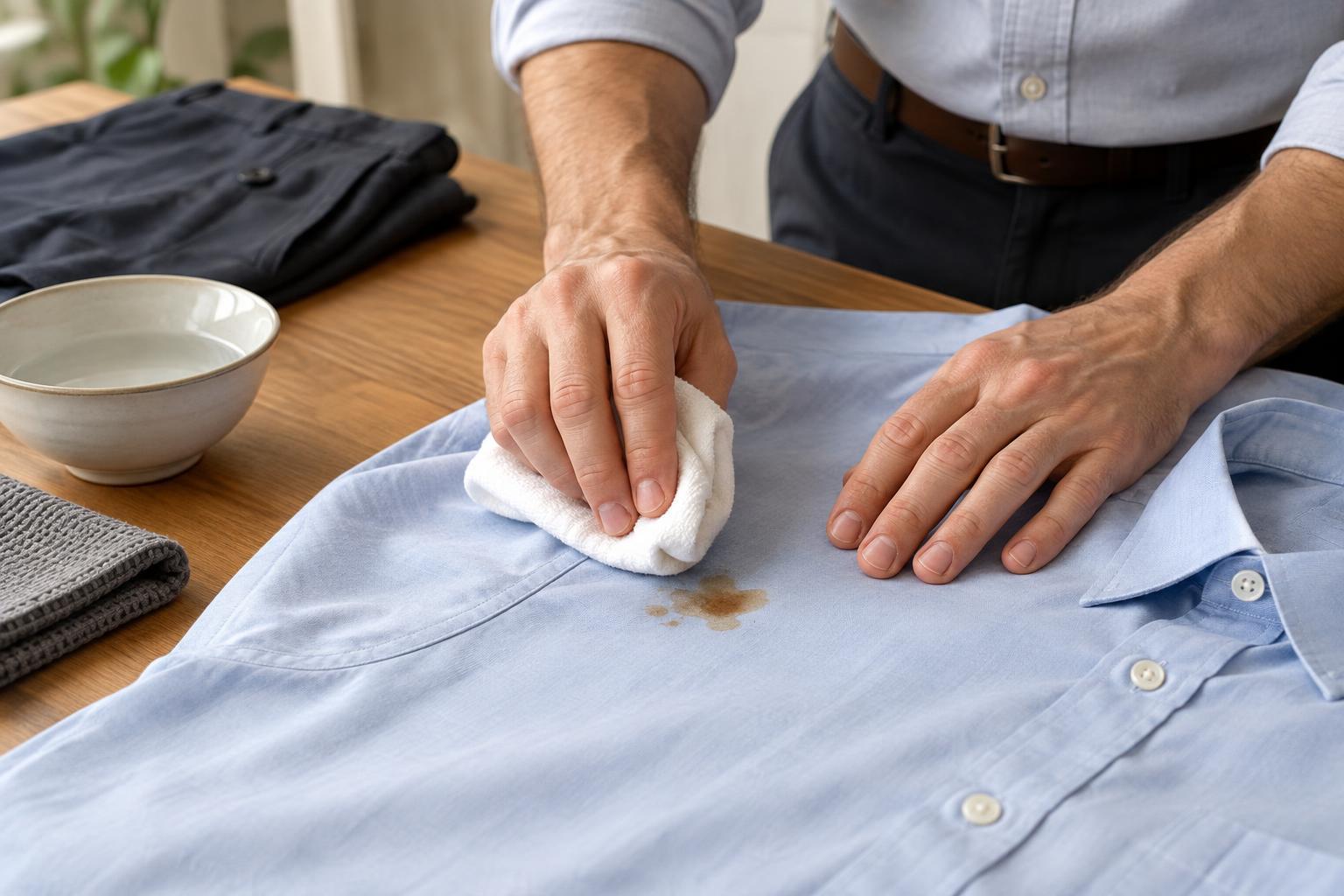
For washable clothes, lift off any solid material with the edge of a spoon, then blot liquid with a clean cloth or paper towel. Work from the outside of the mark toward the center so it does not spread. Avoid rubbing: friction can push a stain deeper into the fibers or roughen the fabric. Put a clean towel behind the stained area when treating it, and test any product on a hidden seam first.
Use a simple first-response routine
When you are unsure what caused a stain, begin gently. Rinse the back of the affected area with cool water if the care label allows it. This encourages the mark to leave the fabric rather than travel through it. Apply a small amount of liquid laundry detergent, let it sit briefly, then rinse and inspect. Follow the product directions rather than assuming that more detergent will work better.
Wash the garment according to its label, but check the stain before putting it in a tumble dryer or ironing it. Heat can make some remaining marks harder to remove. If you can still see the stain, repeat a suitable treatment and wash again. Patience is usually kinder to clothes than aggressive scrubbing or a string of unfamiliar chemicals.
Match the treatment to the mark
For cooking oil, salad dressing or greasy food, first blot up what you can. Work a little liquid laundry detergent into the spot with your fingers and wash at a temperature the label permits. An oil mark may look faint while the fabric is wet, so let the item air-dry and check it in good light before deciding it is gone.
For coffee, tea, wine or fruit juice, blot promptly and rinse with cool water from the back of the fabric. Pretreat with laundry detergent before washing. For blood, start with cold water rather than hot; for an egg or dairy stain, remove any residue and use cool water for the initial rinse. Heat may make protein-based stains more stubborn.
Ink varies by pen and fabric, so there is no reliable single fix. Blot without spreading it, place a towel beneath the area, and try a stain remover labeled suitable for ink and for the garment’s fabric. Test it discreetly first. If the mark is large or on an expensive piece, a cleaner is a better first stop than experimenting at home.
Handle collars, cuffs and underarms gently
Collars and cuffs often collect body oils, while underarm areas may hold a mix of perspiration and product residue. Before washing, apply a little liquid laundry detergent to these areas and gently work it in. Give the detergent time to act according to its label, then launder as usual. Treating buildup before it becomes obvious is easier than trying to rescue a badly marked shirt.
Be careful with strong products on dark clothing: they may fade the dye even if they remove the stain. Never mix bleach with other cleaning products. If you choose to use a stain remover or laundry booster, follow its directions and check that it is suitable for the fabric and color. More force is not necessarily better, particularly on fine shirt fabrics and knitwear.
Know when to stop and how to prevent the next stain
A tailored jacket, lined coat, silk tie or suede shoe is worth a cautious approach. Blot a fresh spill, avoid soaking the material, and tell a professional cleaner what caused the mark and what you have already applied. The same advice applies when a stain has resisted several attempts: repeated wetting or rubbing can do more damage than the original spill.
For everyday washable clothes, a small routine goes a long way. Inspect garments before they enter the laundry basket, keep a suitable detergent or stain remover on hand, and allow treated pieces to air-dry until you are satisfied with the result. You will not remove every mark, but careful first steps give a versatile wardrobe a better chance of staying wearable.