Start with the whole shoe
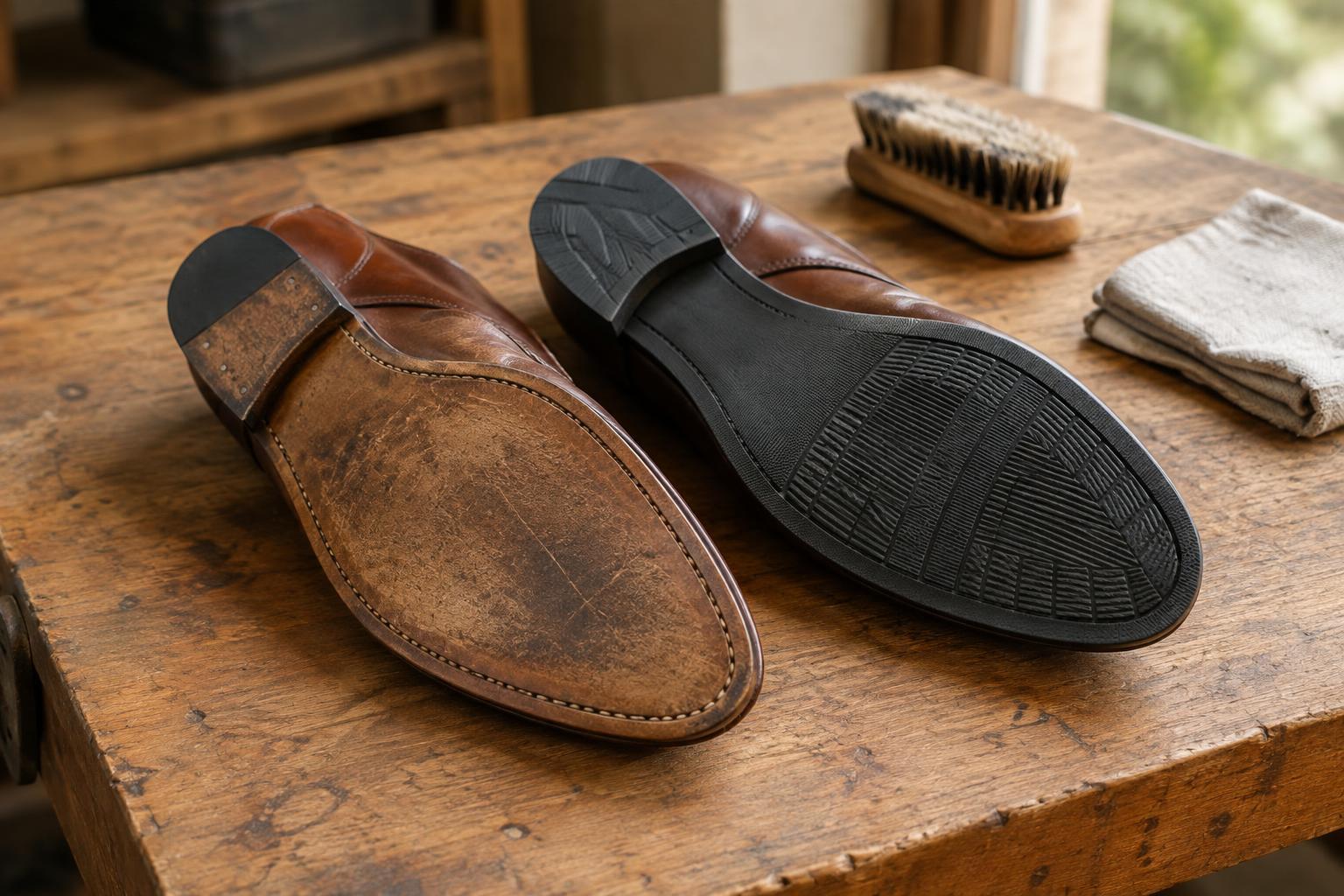
A leather sole gives a dress shoe a slim edge and a traditional finish. A rubber sole often offers more grip and better protection from damp pavement. Those are useful starting points, not rules: sole thickness, tread, heel material and shoe construction can matter as much as the label on the outsole.
Think first about the routes you actually take. A shoe worn mainly indoors has a different job from one that regularly crosses wet streets or spends a full day on your feet. If you are buying one versatile pair, judge it against your most common conditions rather than the rarest formal occasion.
Grip: surface and tread matter
New leather soles can feel slick on smooth or wet surfaces. Wear may roughen the surface, but it does not make leather a reliable wet-weather sole. If your walk includes rain, polished floors or uneven pavement, pay attention to grip before committing to an all-leather outsole. The heel matters too; some leather-soled shoes have a rubber heel lift that behaves differently from the forefoot.
Rubber usually provides a more practical starting point for damp conditions, but rubber soles vary widely. A thin, nearly smooth dress sole will not behave like a deeply treaded boot sole. Tread can help on loose or wet ground, while a low-profile pattern may better suit an office shoe. No outsole guarantees traction on ice or on a slippery floor, so choose footwear with the conditions in mind and walk cautiously.
Comfort: look beyond softness
Rubber can add cushioning and reduce the hard feel of pavement, particularly in a thicker sole. The trade-off is that some rubber outsoles add weight or make a dress shoe look and feel less flexible. Leather soles are often thinner and can bend comfortably once worn, although they may transmit more of the ground beneath your feet. Neither material can make up for a poor fit.
When trying shoes on, check whether your heel stays secure, your toes have room and the sole bends near the ball of your foot rather than awkwardly through the middle. Consider how the shoe feels after walking, not only while standing. Insoles, midsoles and the shape of the last also affect comfort, so two shoes with leather soles may feel less alike than a leather-soled and a rubber-soled shoe.
Repairability depends on construction
A worn outsole does not always mean the shoe is finished. Many stitched constructions, including welted and some stitched-through designs, can be resoled by a capable repairer. That can apply to leather or rubber outsoles. The condition of the upper, welt and internal structure, as well as the repair cost, determines whether the work makes sense.
Some glued-on soles can also be replaced, but options vary by design, material and the availability of suitable replacement parts. Ask about the specific shoe rather than assuming all glued shoes are disposable or all welted shoes are economical to repair. If longevity is a priority, ask a retailer or repairer about resoling before you buy.
For a leather-soled dress shoe, a repairer may be able to add a thin protective rubber layer to the forefoot. This can change grip and wear characteristics without the bulk of a full rubber outsole, though it also changes the original feel and appearance slightly. Replacing a worn heel lift promptly is another relatively small job that may help prevent damage to the heel beneath it.
Choose a pair you can maintain
For frequent wet-weather walking, a rubber-soled shoe or boot is usually the more practical choice. For mostly dry commutes, indoor events and a refined profile, a leather sole can work well if you are comfortable managing wet days separately. A thin rubber sole offers a middle ground for many dress shoes; the right balance depends on the shoe and your routine.
Whichever you choose, let damp shoes dry away from direct heat and remove caked-on dirt before storing them. Check the sole edges and heels periodically for wear. Rotating shoes when possible gives them time to dry between wears and makes it easier to spot a repair while it is still straightforward. The best sole is not the one with the most prestigious material; it is the one that suits where you walk and keeps the shoe worth wearing.