Give each layer a purpose
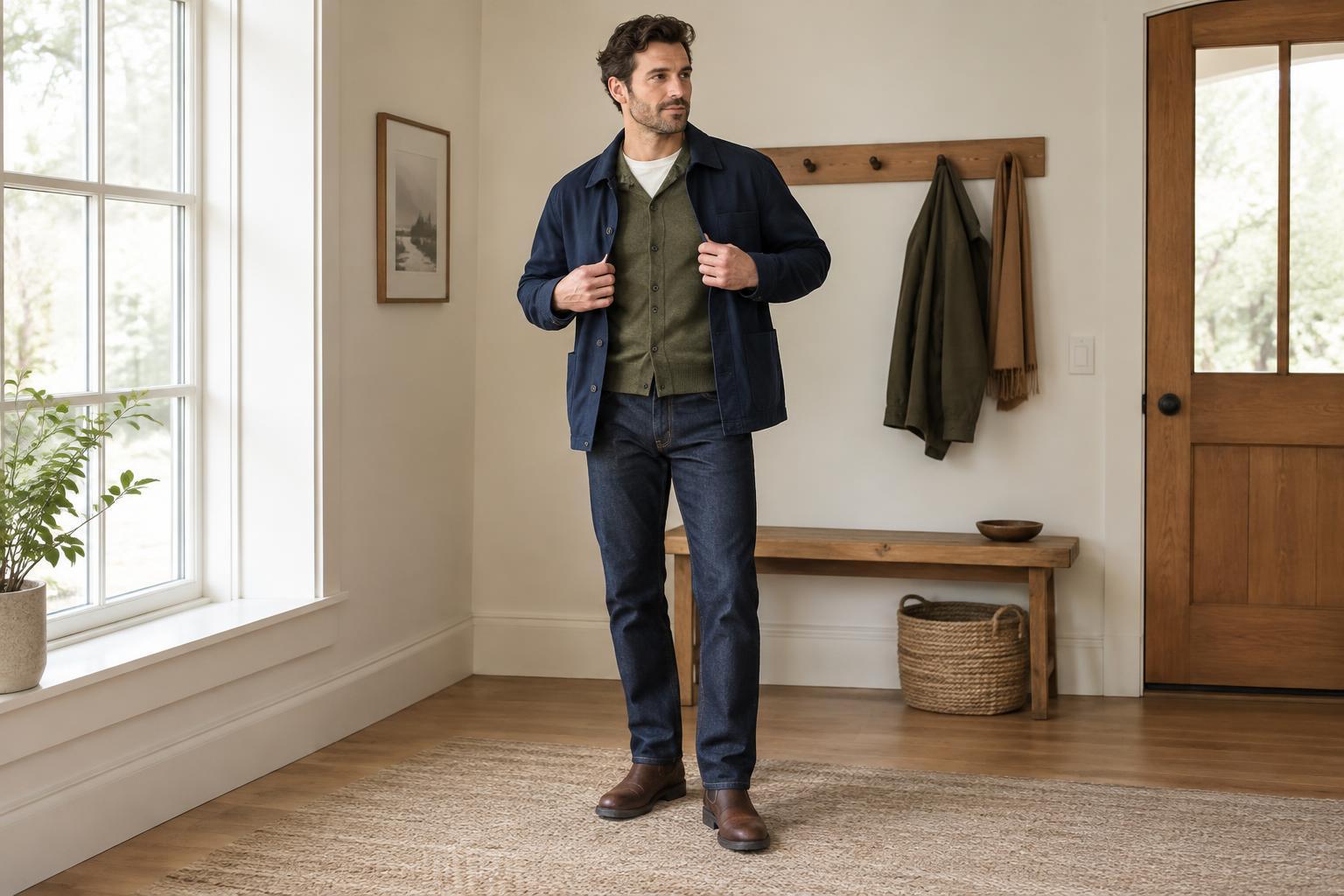
A useful layered outfit has three possible parts: a base layer against your skin, a middle layer that adds warmth or texture, and an outer layer that handles wind or rain. You do not need all three every day. A T-shirt and overshirt may be enough in mild weather; a shirt, sweater, and coat may make more sense when it is cold. Start with the conditions you expect and add only what helps.
Think about where you will spend your time, too. A heavy coat can be useful outdoors but inconvenient on a warm train or in an office. Layers you can remove without leaving an unfinished outfit give you more flexibility. The simplest test is to picture the outfit with its outermost piece off: the clothes underneath should still feel appropriate for your day.
Build from close-fitting to roomy
As a general rule, each successive layer needs enough space to sit over the one beneath it. A base T-shirt should lie fairly flat, but it should not cling or ride up when you move. A shirt or lightweight sweater can fit a little more loosely. Your jacket should close comfortably over the combination you actually plan to wear, not just over a thin tee in the fitting room.
Check movement as well as appearance. Reach forward, sit down, and raise your arms. If fabric pulls sharply across your upper back or bunches heavily at the elbows, try a different size or a thinner layer. Pay particular attention to collars, cuffs, and hems: several thick edges stacked in one place can make an otherwise well-fitting outfit feel crowded.
Choose fabrics with the whole outfit in mind
Thickness matters as much as warmth. A fine-knit sweater may fit neatly under a jacket where a chunky knit will not. Cotton shirts and tees are familiar starting points, while wool knits can provide warmth without requiring a very heavy garment. For wet conditions, consider whether your outer layer offers the protection you need; an absorbent middle layer alone will not keep an outfit comfortable in rain.
Texture can also help layers look deliberate. A smooth tee under a more substantial overshirt creates contrast without demanding a complicated color scheme. If you are deciding which materials suit your routine or how to maintain them, browse Fabrics and Garment Care · The Paris Style Notebook for more garment-care reading. Whatever you choose, follow each item’s care label so its shape and finish last as intended.
Keep colors and proportions simple
When you are learning to layer, start with colors you already wear together. A neutral base gives a patterned shirt, textured knit, or distinctive jacket room to stand out. You can repeat a color across pieces, but they do not have to match exactly. Aim for an outfit that looks coherent with the jacket on and after you take it off.
Watch where each layer ends. An untucked shirt hanging far below a short jacket can look accidental, while a small amount of visible hem can add depth. There is no universal hem order: compare the full outfit in a mirror and adjust based on the pieces. For a dressier occasion, you may prefer cleaner hems and less visible bulk; Occasion Dressing · The Paris Style Notebook offers further browsing on occasion dressing.
Test combinations before you need them
Try on a few complete combinations from your own wardrobe rather than judging each garment separately. One could pair a tee, overshirt, and light jacket; another might use an Oxford shirt, fine sweater, and coat. Notice which pieces slide on easily, which catch at the sleeves, and whether the outfit remains comfortable after sitting for a while. This is more useful than buying another layer simply because it looks versatile on its own.
Keep the combinations that work in mind for different temperatures and settings. If one repeatedly feels bulky, remove a layer or substitute a lighter version before replacing everything. Layering should make your wardrobe more adaptable, not more complicated. For broader outfit ideas as you refine your approach, browse The Paris Style Notebook and bring the combinations back to the clothes you already own.