Why dark clothes change color
Dark clothing often looks sharp because its color is deep and even. Over time, a black T-shirt may turn gray at the seams, or navy trousers may look lighter across the thighs. Some change is difficult to avoid: wear, laundering and exposure to light can gradually alter a garment’s surface or remove some of its dye. The result depends on the fiber, dye, finish and construction, so two garments washed the same way may age differently.
Not every pale patch is permanent fading. Detergent residue, lint and creases can make dark fabric look dull. Before changing your laundry routine, inspect the garment in good light. A gentle brush may lift lint; a rinse may address residue if the care label permits it. If the fibers themselves look worn, especially at pockets, cuffs or other high-friction areas, washing differently may slow further change but will not restore the original surface.
Wash when needed, not by habit
Each wash exposes clothing to water, detergent and movement. That does not mean dark clothes should never be washed: sweat, oils and dirt also affect how they look and feel. Instead, decide based on use. A shirt worn close to the skin may need washing after a day, while a clean pair of trousers worn briefly may be ready to wear again after airing. Follow the care label, and deal with visible spots promptly rather than letting them sit.
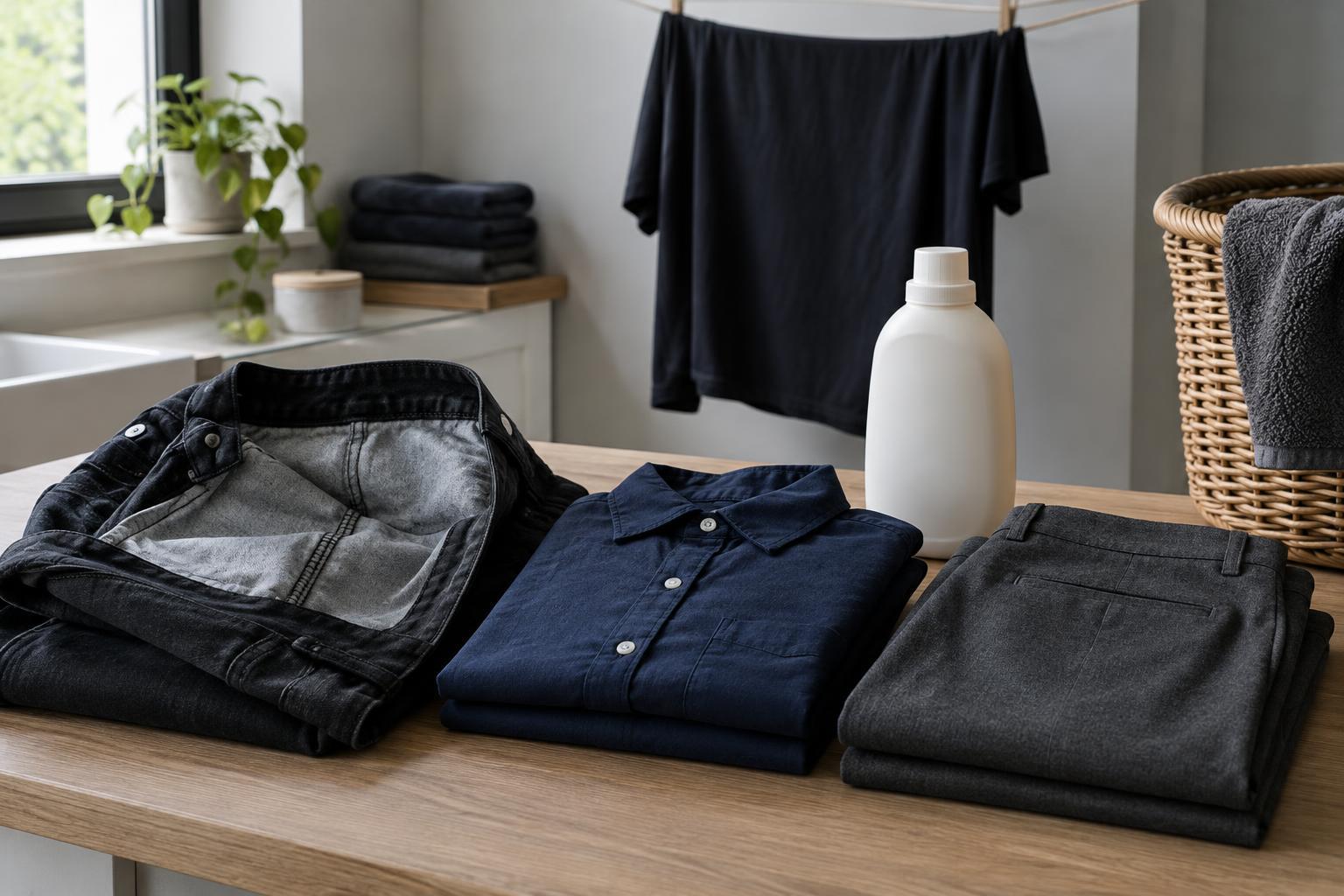
For a machine wash, turn dark garments inside out to reduce rubbing on the visible surface. Wash them with similarly dark items, leaving enough room for clothes to move freely. Overloading can limit rinsing, while a very rough mix of heavy and delicate pieces can increase abrasion. Fasten zippers and hooks so they are less likely to catch neighboring fabric. A mesh bag can offer extra protection to a small or delicate item when its care label allows machine washing.
Choose a gentle wash without sacrificing cleanliness
Check the label before selecting a temperature and cycle. When the garment and its level of soil allow it, a cool wash and a gentler cycle may help limit stress on the fabric and dye. A heavily soiled item may need a different approach, so treat these settings as a starting point rather than a rule. Avoid long, unnecessary soaking, particularly with a garment you have not washed before.
Measure detergent according to the product directions and the size and soil level of the load. More detergent is not automatically better: if it does not rinse away, dark clothes can look cloudy or feel stiff. Choose a product suitable for the fabric, and keep bleach or other strong stain treatments away unless the label and product directions explicitly permit their use. For a new garment with uncertain colorfastness, wash it separately at first; a care label may also give specific instructions about dye transfer.
Dry and store with light in mind
Take clothes out of the washer when the cycle finishes and reshape them as needed. If the care label allows air drying, hang or lay the garment in a well-ventilated place away from prolonged direct sunlight. Sunlight can contribute to color change, and a dark item left in a bright window may fade unevenly. Use a drying rack or a suitable hanger that supports the garment without stretching its shoulders or waistband.
If tumble drying is permitted, avoid more heat and time than the garment needs. Remove pieces once dry rather than leaving them to tumble for an extended period. For storage, make sure clothing is completely dry, then keep it away from persistent direct light. Give folded knits room so they do not develop hard creases, and hang woven garments on hangers that fit their shape.
Know when to maintain and when to refresh
A clothes brush, lint roller or careful spot clean can sometimes improve the appearance of dark clothing without a full wash. On jeans and trousers, inspect high-contact areas for thinning as well as color loss; a fading knee may be part of a worn fabric surface rather than a problem that detergent can fix. Small repairs can help a useful garment stay in rotation, even if its color is no longer perfectly uniform.
Re-dyeing may be an option for some washable, single-fiber garments, but results can vary, especially on blends, stitching, trims and already worn areas. Check the garment’s fiber content and the dye product directions before attempting it. For a piece that needs to look polished for work or an occasion, an even but slightly softened color may serve you better than a risky attempt to make it look new. The most reliable approach is to care for dark clothes consistently and accept that their appearance will evolve with wear.