Start with the fit, not the pattern
Laces let you adjust how firmly a shoe holds the top of your foot. They cannot fix a shoe that is too short, too narrow at the toes, or the wrong shape for your foot. Before changing the lacing, put on the socks you normally wear with the shoes, seat your heel at the back, and check that your toes have room to move. Then tighten the laces gradually from the bottom upward rather than pulling hard on the ends alone.
Aim for a secure midfoot without pinching. Walk a few steps and notice whether your heel lifts slightly, the tongue shifts sideways, or pressure builds over one spot. A little movement is normal, but a shoe that needs to be cinched painfully tight to stay on may not fit well. Use a lacing change to fine-tune a reasonable fit, not to disguise a poor one.
Use crisscross lacing as the everyday default
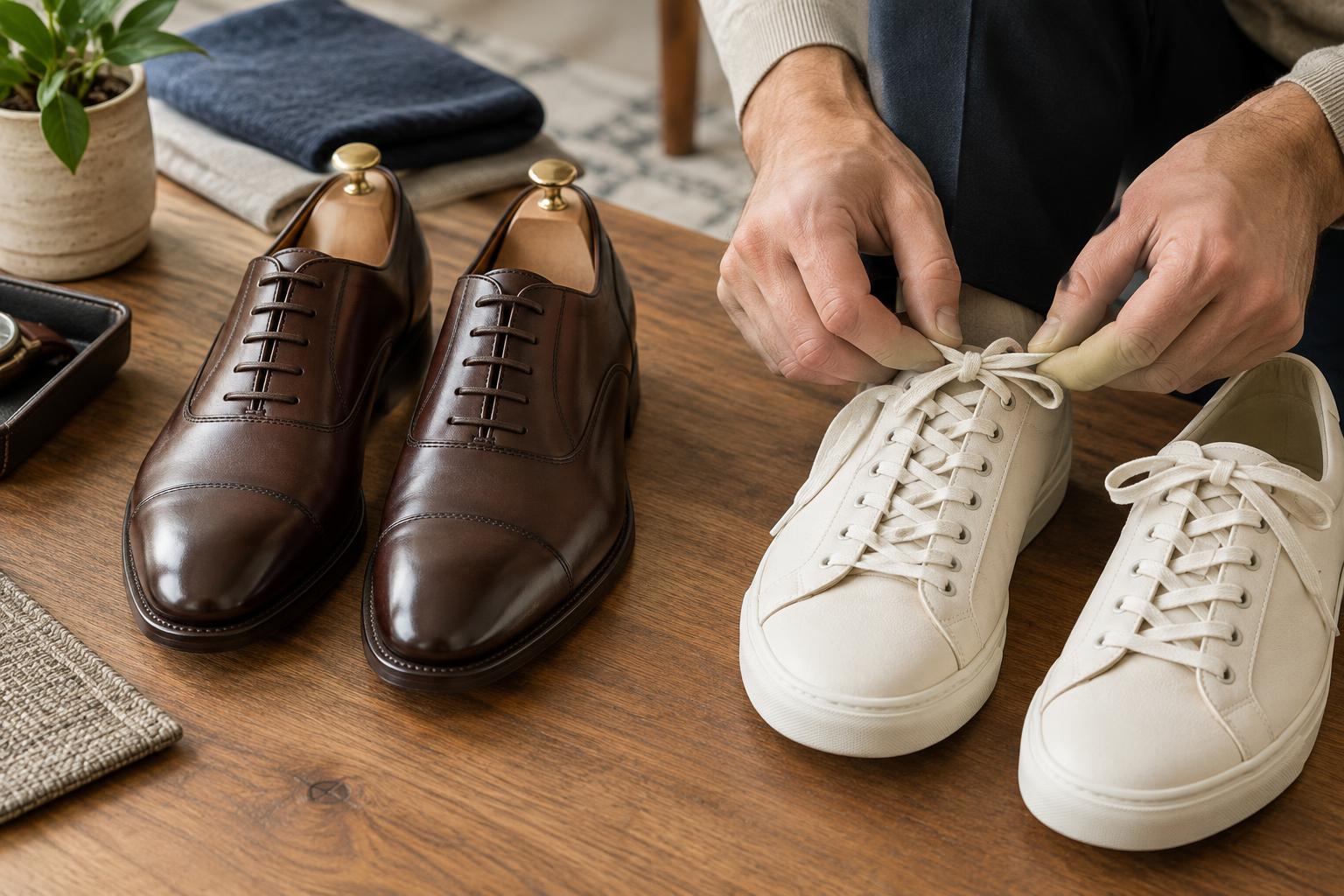
Crisscross lacing is a useful starting point for most sneakers, boots, and derby shoes. Each lace crosses the tongue and feeds through the next eyelet on the opposite side. This pattern is straightforward to tighten one section at a time, which helps when the lower foot needs a different amount of room from the ankle. If you remove the laces to clean the shoes, start with equal lengths on both sides so the finished bow sits near the center.
For a clean appearance, keep each crossing flat and untwisted. Tighten from the lowest pair of eyelets that needs adjustment, then work upward; tugging only at the top can leave the lower rows loose. On boots, you can keep the foot section snug while lacing the ankle a little more gently for comfortable movement. Check the fit again after walking, since new laces may settle.
Choose straight-bar lacing when a dress shoe calls for it
Straight-bar lacing creates horizontal rows across the tongue, with most of the lace routed underneath. Its orderly look often suits Oxfords and other dress shoes with closely spaced eyelets. It is an aesthetic option, not a requirement: a tidy crisscross can look appropriate too, especially on more casual leather shoes. The exact path for straight bars varies with the number of eyelet pairs, so check that both lace ends emerge near the top before tightening everything.
Dress shoes should close without forcing the facing edges together. On an Oxford, the gap between those edges can vary with the shoe and the shape of your foot; do not overtighten just to make it disappear. If a straight-bar pattern makes one area difficult to adjust, switch back to crisscross. A comfortable, evenly tensioned shoe looks better than a precise pattern pulled painfully tight.
Adjust individual areas instead of tightening the whole shoe
If the top of your foot feels pressed under one row of laces, try easing that crossing first. On a sneaker with several eyelets, you can also skip a pair directly over the sensitive area, passing each lace upward on its own side before resuming the crosses. Keep the rows above and below secure so the shoe still holds your foot. If pressure persists even with loose laces, the shoe may lack the depth you need.
Some sneakers have an extra eyelet near the ankle that can be used for a heel-lock, sometimes called a runner’s loop. Feed each lace through the extra eyelet on its own side to make a small loop, cross the lace ends through the opposite loops, and pull gently before tying. This may help with minor heel movement without tightening the entire shoe. If it digs into your ankle or does not help, return to ordinary lacing rather than pulling harder.
Finish with a knot that stays tidy
Tie your shoes firmly enough that the bow stays put, but avoid yanking the knot tight against the tongue. If the bow sits crooked or comes undone easily, check how you make the second half of the knot: the lace should wrap in the opposite direction from the first crossover. This helps the bow lie across the shoe rather than along its length. A simple double knot can help with slippery laces, provided you can still undo it without straining the eyelets.
Finally, look at the lace length. Long loops can catch underfoot, while very short ends are awkward to tie. Replace badly frayed laces with a similar length and a thickness that passes easily through the eyelets. Keep the spare pair if the shoes came with one. Lacing works best as a small, reversible adjustment: choose the pattern that lets you dress easily, walk comfortably, and keep the shoes looking intentional.